• Middle, high school and college students from 15 states took part in the Sing With Me Chinese Lyric Competition last year, with nine videos being chosen as the final winners.

    In an effort to get students engaged with Mandarin through modern music, the contest challenged students to first write lyrics and the set them to music in popular genres such as rock-pop, rap, musical theater, hip-hop and R & B.

    A total of 46 student teams took part, creating music videos. You can view the winners here. The organizers hope to hold another competition in the future if funding can be secured.

    A wide range of songs

    Some were heartfelt, others amusing.

    “I crave peace in my heart,” sings a student from Post Oak Academy in Michigan. “When you look at me, what do you see? Do you see a person or only their dark skin?”

    It takes a long time to write Chinese lyrics,” sang students from Washington Fields Intermediate School in Utah. “If you haven’t heard enough, don’t worry, more stories are coming.”

    Then there are angsty songs like the one from students at Seaton Hall Preparatory School in West Orange, New Jersey. “Under the weight of sorrow the Earth weeps often. …. Weary from conflicts and separations, many disasters are hanging over Earth.

    The creators of the contest hope to give students learning Chinese a better link to China’s popular culture.

    “Many Chinese educators have commented that Japanese learners can read manga and anime and Korean learners have popular K-Pop bands. What can we offer from the modern teen culture that would appeal to the interests and curiosity of Chinese language learners?” said Dr. Shuhan Wang, one of the creators of the competition.

    The Sing With Me Chinese Lyric Competition was conceived by Professor Sean X. Gao of the University of Delaware, Lisa Huang Healy of Executive Director of New America International Culture Corporation and Wang.

    “Our vision is to use pop music to boost Chinese language education nationally,” Huang Healy said.

    The full award ceremony is available here.

    The organizers also put together a nice list of Mandarin language pop songs which could be a good jumping-off spot for students wanting to create their own Chinese language masterpieces.
  • From the Financial Times

    JUNE 16, 2023, By Christina Lu

    Inside a sunny classroom in northeast Washington, D.C., Baby Snoopy, Thing One, Spiderman, and other children in costume are busy tucking into lunch when three visitors—including me—disrupt the feast. As I wave, awkwardly, one of the students offers a shy greeting: Ni hao. 

    That could be because I am Chinese—or because these children spend their days immersed in Mandarin. At the Washington Yu Ying Public Charter School, which I’m visiting on Character Day, 3- and 4-year-olds play, eat, and learn in Mandarin. (Older students are taught in both Mandarin and English.) Having reported on how deteriorating U.S.-China relations have throttled higher education and academic exchanges, I am here on a June morning with a related mission: to see if Washington’s hawkish China consensus has affected demand for Mandarin immersion programs in its own backyard.

    Please read more here.

  • Oil City News June 10, 2023

    By RHONDA SCHULTE

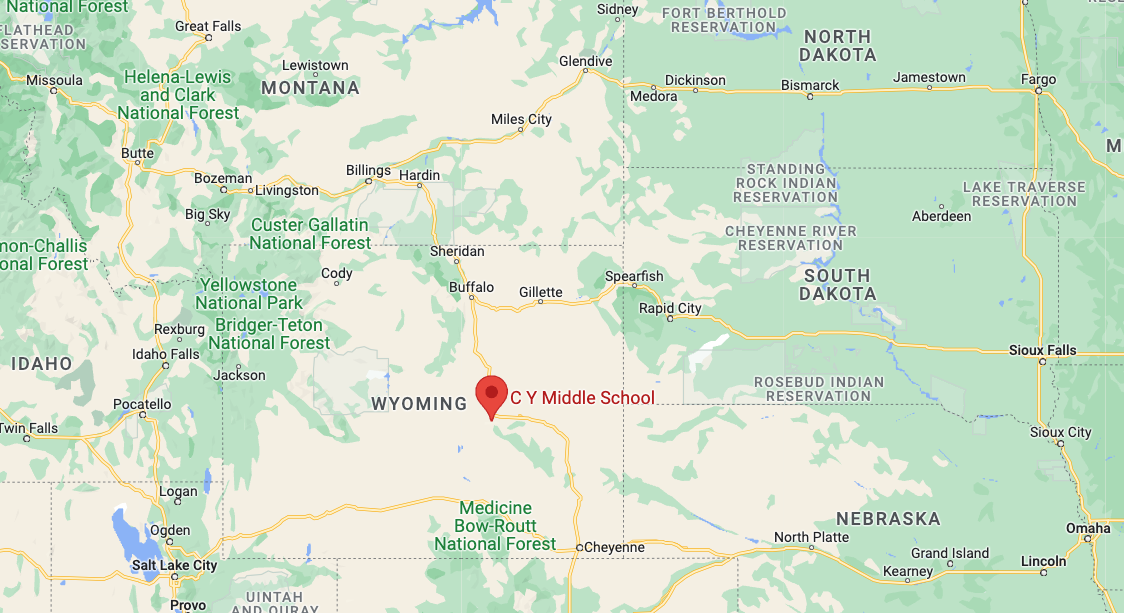
    CASPER, Wyo. — Chinese ethnic groups, traditional games and food were the focus of a school-year-end Culture Day celebration among CY Middle School students.

    Culture Day on Thursday, June 8, honored nine years that the CY eighth graders in the Natrona County School District Mandarin Chinese Dual Language Immersion Program had spent gaining language proficiency and knowledge of China.

    “It is a happy ending,” CY teacher Fengxiang Shi said. 

    Please read more here.

  • Daily Hampshire Gazette

    By MERCEDES LINGLE

    6/1/2023

    HADLEY, Mass. — There are few graduations like the one that takes place at the Pioneer Valley Chinese Immersion Charter School, where the student speakers kick off their talks in Mandarin.

    It’s fitting, of course, as they’ve been immersed in the language for which their school is named since kindergarten.

    Both student speakers at the school’s seventh annual commencement ceremonies Wednesday, Dexter Knight-Richard and Augusto Schwanz, acknowledged at the outset of their speeches that many in the audience would not understand the words — at least until they reverted to English. But the sentiments of what they were saying certainly came through.

    Please read more here.

  • Please see a lovely photo spread here from the Mandarin immersion program at Paradise Valley Elementary School in Casper, Wyoming.

  • The Los Angeles Times

    BY JEONG PARKANH DO MAY 5, 2023 5 AM PT

    In the relaxed cadences of her native Taiwan, Kelly Chuang instructed her students to repeat after her.

    Wo bu shi taiwan ren. Wo shi meiguo ren” — “I’m not Taiwanese. I’m American.”

    She projected the written Chinese for the phrases onto a whiteboard. “Taiwan” appeared in the traditional form, with 25 strokes in the second character alone.

    The four adults were studying Mandarin, Taiwanese style — elaborately written characters over the simplified versions used in China, no “ers” appended to words, less of a curled tongue for “sh” sounds.

    In a small way, as they struggled over the language’s four tones and learned how to make Taiwanese spring rolls last month in a classroom in San Marino, they were part of a high-stakes global chess game.

    “It looks intense,” said Deseree Oaxaca, 25, as she stared at the characters for “Taiwan” on the board.

    The class and others like it in the U.S. and Europe are backed by the Taiwanese government, which hopes to spread its version of Mandarin — along with its values of freedom and democracy — as China’s threats against Taiwan become increasingly bellicose.

    Please read more here.

  • Every once in a while a new school pops up on my radar and I think, wait, what? Wasn’t there another school in that same location? Then I check my list and realize there was. I’m grateful to the Silicon Valley International School for having such a nice history section on its website to make clear how this all came about. So often schools change names or merge and never explain what happened, making it very confusing to those of us trying to keep track.

    This is especially important when there are multiple schools with similar names. Nearby there’s also the German International School of Silicon Valley that’s entirely separate. And Yew Chung International School-Silicon Valley. You see how a person could get confused.

    There isn’t actually a new Mandarin immersion school south of San Francisco in Silicon Valley, but one of the ones that’s there has a new name.

    Silicon Valley International School in Palo Alto, California is an amalgam of several schools. The Kindergarten through high school now offers Mandarin, French and German immersion.

    It all dates back to 1979, when a French immersion school named the Peninsula French American School was founded in Palo Alto.

    That school added a Mandarin program in 1996 and changed its name to the International School of the Pacific.

    Fast forward to 2020 and the school rebranded itself as the Silicon Valley International School.

    Meanwhile, back in 1993, the Deutsch-Amerikanische Schule San Francisco, a German immersion school, began talks with the International School of the Peninsula to discuss how both schools could benefit from a merger.

    Lack of space made that impossible despite more discussions in 1998 and 2019. But then in 2020 “the COVID-19 pandemic compelled a more expedited merger.”

    The schools officially merged in 2021.

    This one school now offers three distinct language tracks, Mandarin, French and German, in addition to a bilingual International Baccalaureate World School.

    And if this all sounds a little familiar, it could be because much the same thing happened up near Portland Oregon, when the German International School merged with a Mandarin school, creating a German-Mandarin immersion program.