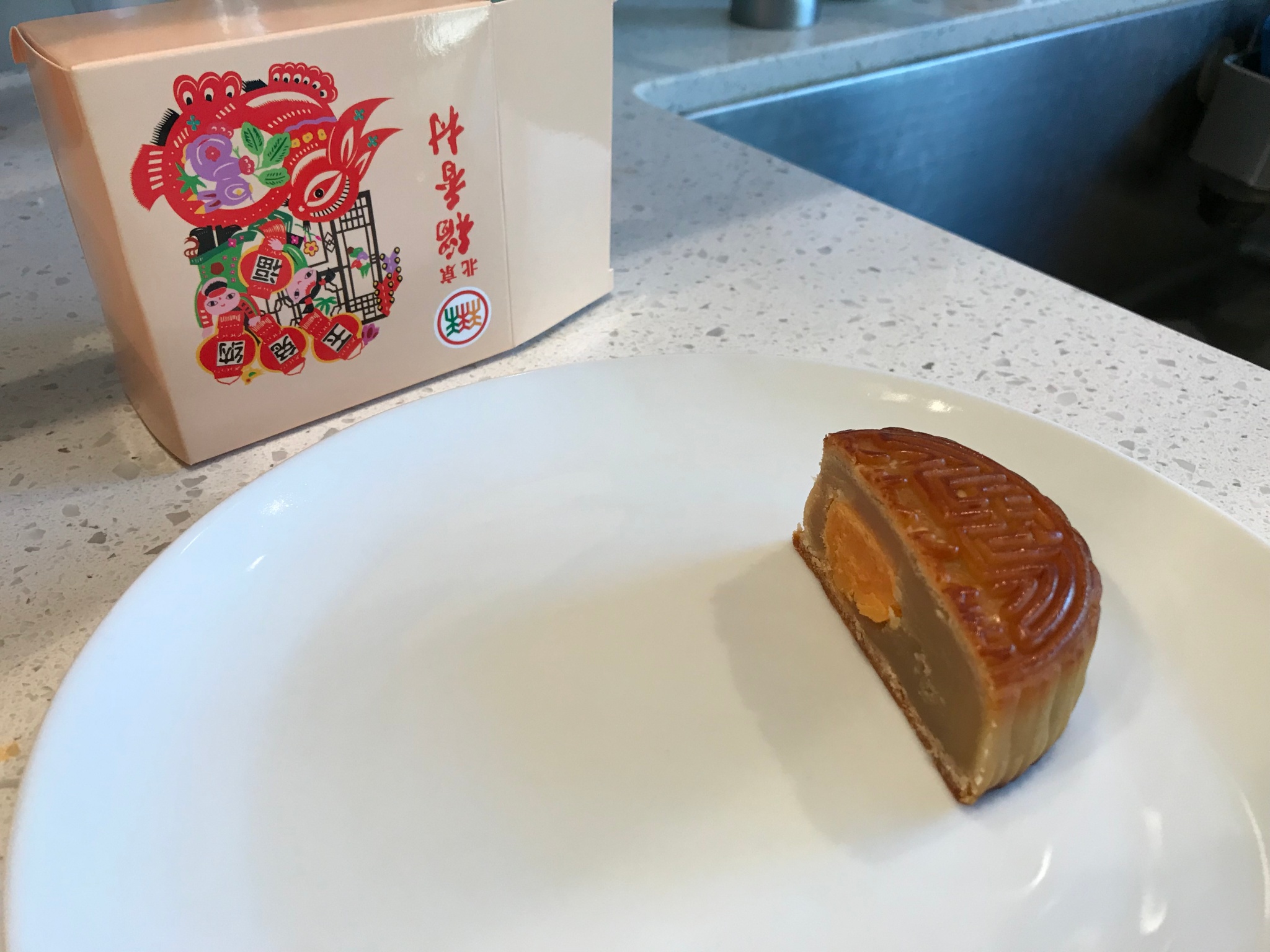
• A lotus seed-filled moon cake with one egg yolk.

    If your kids start bringing home drawings of lanterns, talking about the Goddess of the Moon or describing lotus seed cakes in class, then you know it’s time for the Mid-Autumn Festival.

    For folks who didn’t grow up in families that celebrated what’s also known as the Moon Festival, here’s a little background.

    The holiday is celebrated on the 15th day of the 8th month of the lunar calendar, on a full moon. Because it uses a lunar calendar, the date shifts somewhat but is always in the early autumn. This year it falls on September 15.

    It’s a day for friends and family to gather, offer thanks for the fall harvest and express wishes for longevity and good fortune. Similar holidays are celebrated in Japan, Korea, Vietnam and across Southeast Asia.

    Lanterns are carried and displayed as symbolic beacons to light people’s path to prosperity and good fortune. If you have kids in a Mandarin immersion elementary program, there’s a good chance they’ll be bringing home construction paper lanterns at some point.

    They might also hear legends about the festival centering on the Goddess of the Moon, Chang’e 嫦娥 and her husband the archer Houyi 后羿 This unlucky pair are only allowed to see each other once every year on the 15th day of the eighth lunar month when the moon is full.

    At its heart, though, the Mid-Autumn Festival is a harvest celebration. Just like at Thanksgiving, families try to be together for the holiday. If the family can’t all get together, they all look at the moon and think of those who are not together with them knowing they’re all looking at the same moon.

    In China, people exchange lyrical text messages talking about how they wish they could be together. You can find some examples here.

    There is plenty of symbolism for the holiday around the full moon. The moon is round, symbolic of the family coming together. It’s popular to eat a family meal together called tuán yuán fàn 团圆饭 or “reunion dinner.”

    It’s also a time to eat moon cakes. In my family we call it “the festival of moon cakes.” These are dense treats about the size of a hockey puck (or Amazon Dot for the younger generation) and consist of a thin pastry coating over a disk of something sweet. They’re usually filled with sweet red bean paste or lotus seed paste. The latter is something like the Chinese equivalent of marzipan.

    Packing up moon cakes to send to far-away college students.

    Inside that filling in many moon cakes is a single, hard-cooked, salted yolk from a duck egg. The saltiness of the yolk contrasts nicely with the sweetness of the filling, or at least it does for me. Some moon cakes feature two yolks, which seems like too much for me but your taste may vary.

    Perhaps more importantly in a culture enamored of symbolism in food, the egg yolk is thought to look like the full, round moon. Moon cakes are cut into thin wedges and typically served with tea.

    Moon cakes seem to be a love ’em or hate ’em kind of thing. Some Chinese people I know describe them as “China’s answer to the fruitcake, something people give you and you pass on as quick as you can so you don’t actually have to eat them.” Others (like me) actually like them.

    Moon cakes have become an important present to give during the weeks around the Moon Festival. Go into any Asian supermarket and you’ll find the front of the store piled high with stacks of different types and price points, depending on the quality and how fancy the packaging is.

    While sweet red bean paste and lotus seed paste are the most common, you’ll also find nut-filled, pineapple and melon (the melon ones are vile, I’m just warning you.) There are also smaller silver dollar-sized moon cakes that are more single serving.

    And if you’d been wondering how moon cakes are made, here are some cool videos:
    How mooncakes are made

    Making traditional mooncakes

    Mooncakes: What they are and how they’re made

    Explaining the mooncake

  • While most American parents probably wouldn’t want to send their kids to boarding school in Malaysia, it’s interesting to see what’s popular with parents on the other side of the globe.

    Epsom International School is a “British-inspired” boarding school in Malaysia, founded in 2014 by a Malaysian businessman who had been educated at Epsom College in England, a boarding school founded in 1853 about 20 miles west of London.

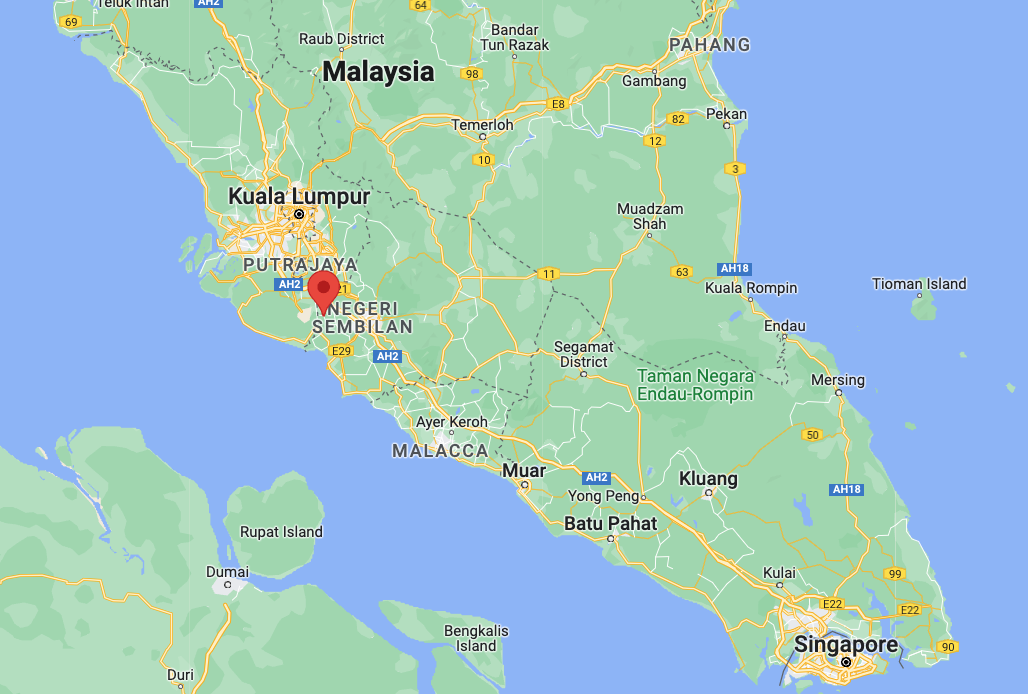
    The co-ed Malaysian school is a “sister school” to the one in the United Kingdom, with classes conducted in English and using English curriculum. It’s located about 45 miles south of the Malaysian capital of Kuala Lumpur, and about 20 minutes from the city’s airport.

    Of interest to Mandarin immersion parents is the newly-begun Mandarin immersion track at the school, which launched last year. It begins in what is known as the “prep school” section, for students ages 3 to 6. In these years, classes are 50% in English and 50% in Mandarin.

    Then from age 7 to 13, students are integrated into the school’s standard program, with the option of additional Mandarin language classes. They will then be able to take standard international tests for both English and Mandarin proficiency. In English, that is the International General Certificate of Secondary Education, typically taken around. the age of 14. The Chinese test is the IGCSE Chinese First Language, typically taken by students whose first language is Chinese.

    Interestingly, I heard about the program from a Sinagporean website. The school has a special week-day boarding program for students from that country, about 200 miles southeast of the school itself.

    If nothing else, it’s interesting to see what other schools look like and imagine the lives children across the globe lead.

  • Mandarin immersion program opens at Hidden Trails Elementary

    By Josh Thompson, The China Champion

    August 27, 2022

    Forty-eight kindergarten students and their families attended a ribbon-cutting ceremony Wednesday afternoon for the Chino Valley Unified School District’s first Mandarin Dual Language Immersion (DLI) program at Hidden Trails Elementary School in Chino Hills. 

    “This is the first dual language program offered through the Chino Valley Unified Multilingual Academy Pathways,” school district spokeswoman Andi Johnston said. 

    The district was scheduled to launch the program for the 2021-22 school year, but the timeline was delayed due to the COVID-19 pandemic, she said.

    Please read more here.

  • Verona Area School District

    Infusing culture into education: Mandarin language program at high school aims to grow while igniting passion for China

    For programming to be successful in a community, it requires some marketing and advertising. That is just as true for school district classes as it is for anything else.

    For that reason, Verona Area School District educators Adam Gault and Qin “Daisy” Tian were gutted that – apparently due to their lack of effectively getting the word out – there will not be an introductory-level Mandarin class in the district this coming 2022-23 school year.

    Despite that disappointment, the pair still have much to be proud of from this past school year.

    Please see more here.

  • According to the website The Hill:

    A 2020 Council on Foreign Relations report notes that at the State Department, “language-designated positions overseas are 15 percent vacant, and 24 percent of those staffed are filled by officers who do not meet the minimum language requirement.” The Defense Department has over 30,000 language positions, many of which it cannot fill. This  deficit has greatly hampered the United States in diplomacy, intelligence gathering, war fighting, and nation building.

    I read the report, and it makes some interesting points:

    The first is the importance of the State Department and American diplomatic efforts overall:

    The State Department’s ranks are still among the most talented professional public servants anywhere in the government. When properly empowered and entrusted with significant responsibilities, American diplomats play essential roles in consequential outcomes for the country.

    Second is the crucial, but often underappreciated work the State Department does in the realm of climate change. Today’s college students are increasingly focusing on sustainability, environmental and climate change as areas of study, with 39% of students saying it’s the important topic facing the world.

    Traditionally, the State Department has played the leading role in negotiating international climate agreements, including the landmark 2015 Paris Agreement, the most ambitious climate agreement ever reached.

    Finally, there is a big need for Chinese speakers (or there was in 2020):

    DOS still has more Portuguese speakers than Arabic and Chinese combined.

    DOS still has more Portuguese speakers than Arabic and Chinese combined.

    Given these things, the Foreign Service might be someplace high school students getting ready for college might aim for. There’s change afoot, including a newly improved selection system that is the first significant change to the process since 1930. As the State Department said last month:

    The Department is moving away from the Foreign Service Officer Test (FSOT) as a pass/fail gateway test and expanding focus on a candidate’s education and experience for a more holistic approach in the selection process.

    As high school students get asked “what are you going to do with Chinese in college,” this is perhaps something for them to think about as they put together their class lists and consider the future.

  • By DR. BRIAN McDONALD, PUSD Superintendent   JUNE 2, 2022

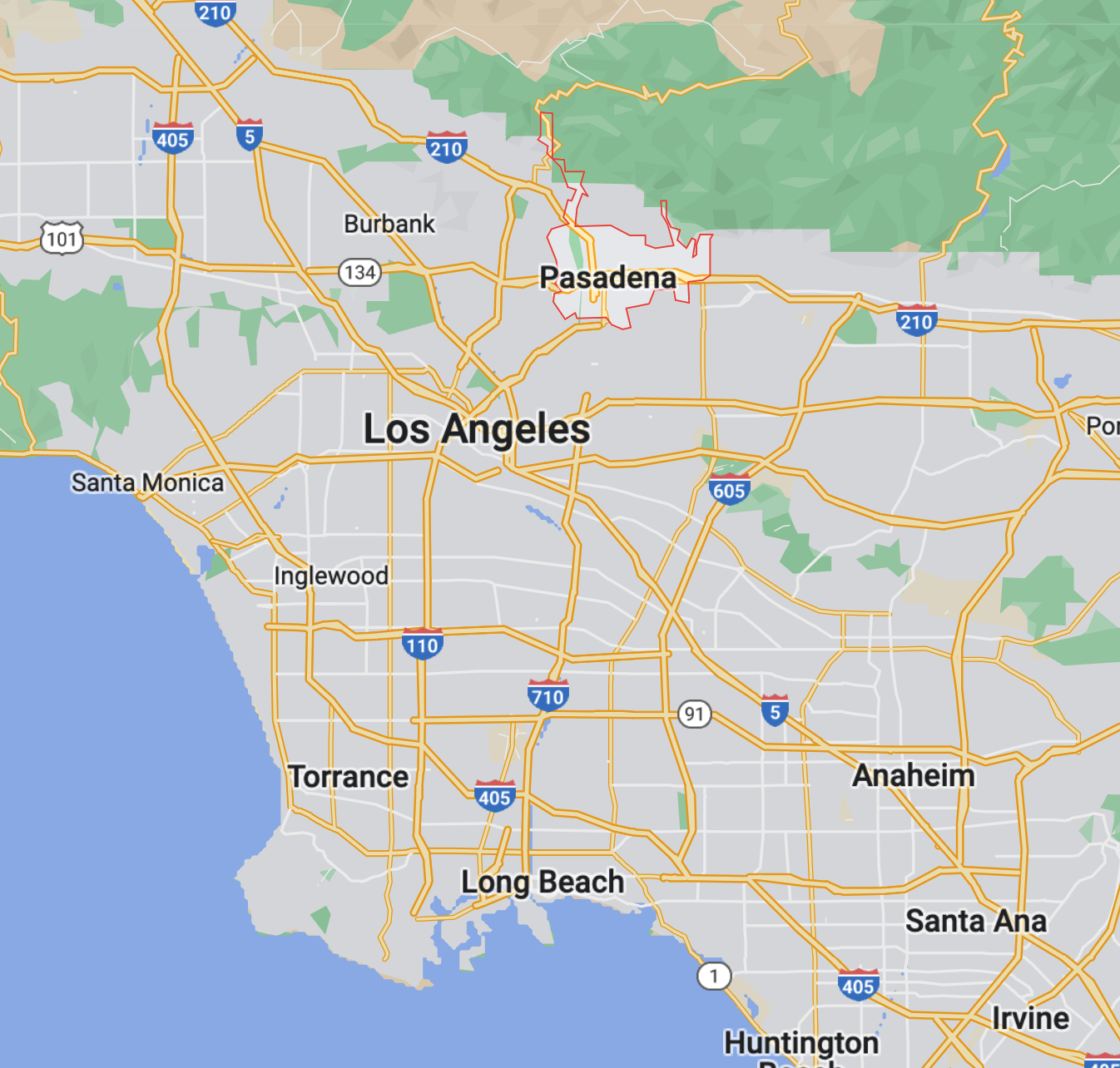
    Pasadena Unified is getting ready to say farewell in multiple languages to the founding class of students who began the Dual Language Immersion Program in kindergarten. The program, started in the 2009-2010 school year has enabled students to master academic subjects in both English and a target language (Spanish, Mandarin, French, or Armenian). It all began with one Mandarin kindergarten class, one small Mandarin first grade class, two Spanish kindergarten classes, and one Spanish first grade class and it now includes programs at over a dozen PUSD preschools, elementary, middle, and high schools.

    The first graders graduated last year but this is the first kindergarten class to graduate. One of the parents who helped launch the program over a decade ago called it transformative and says her children will never really know how valuable it has been to learn to read, write, and speak in a target language.

    See more here.

  • The Park Record

    Letter to the Editor: May 1, 2022 From a student in the district

    Utah is the leader in Dual Language Immersion (DLI) and secondary language learning programs in the United States. Utah currently offers DLI and secondary language programs in the public school system in six different languages. Park City School District has successfully implemented 3, Spanish and French in (DLI) and Mandarin. Spanish is the top secondary language in the state of Utah, Mandarin second and French is third.

    The Mandarin Learning Program in PCSD started in 2002, when David Knell became the first teacher in the state of Utah to start teaching Mandarin at the high school level. He retired in June of 2021. The Mandarin program has transitioned to Dr. Kerong Wu. However, we were recently informed that advanced Chinese classes beyond Chinese 3 would be cancelled for the 2022/2023 school year. This was due to low enrollment numbers, but they are at similar enrollment numbers, if not greater than the 2021/2022 school year by 1 student I believe. And now I was told Dr. Wu has resigned and the school district has not been able to find a replacement. So, on the 20th anniversary of this incredible program, the Mandarin learning program has been cancelled! With the incoming students and existing Mandarin learners that has to be over 70 students impacted.

    Please read more here.