Learning another language at a young age in eastern Idaho
Carly Flandro, IdahoEdNews.org
RIGBY (IdahoEdNews.org) – Lorena Reyes remembers feeling different when she was a kindergartner.
The daughter of Mexican immigrants, she only spoke Spanish, and there weren’t many other kids like her.
“I felt like the odd duck out, like I didn’t belong,” she said.
That feeling stayed with her until she met her fourth grade teacher – a Spanish speaker like her. Inspired and less alone, Reyes dreamed of leading her own classroom one day.
Anyone in my house knows there will be fun Christmas presents under the tree, but that also, hiding somewhere in all that wrapping paper, there will be at least one book for each person. Because books matter and can change your life. Plus they’re fun. Talk to me about science fiction sometime and how it turned my sister into an avid reader.
So as you put together those Christmas (or Hanukkah or Kwanza) lists, consider dropping in at least one easy-to-read book in Chinese. Remember, you want this to be a book that your kid picks up and say, “Hey, wait, I can read this!” No dictionaries, no having to ask about words. Just a story they can follow in a language they hear at school every day.
A couple of options:
Our friends over at Mandarin Companion have easy-to-read books for middle and high school students. At this point they’re mostly re-written versions of classics, but never fear, they’re short and easy to follow. Books like Emma, “Clever, rich, and single, the Ān Mò (Emma Woodhouse) is focused on her career as fashion designer. When she tries to find a boyfriend for a new friend, her decisions bring unexpected consequences.” Or Sherlock Holmes or the Prince and the Pauper.
You could also check outpicture books that are actually easy-to-read, from the wonderfully-named Squid for Brains. The problem with most picture books for Chinese kids in China is the vocabulary is too advanced. What you want are books meant for kids coming from non-Chinese speaking households. Squid for Brains also has some books for slightly older readers here.
In the “not great art, but hey, they’re easy to read” category are two books meant for middle schoolers, “Who’s cute?” (Shei haokan?) and “Being cute isn’t enough” (Haokan shi bu gou de) from a press that’s totally focused on providing books that new language learners can read. Most of their offerings are in Spanish but these two are their Chinese offerings.
If your child it’s bored with Chinese myths and legends yet, Sinolingua has a nice series of graded Chinese readers. Their beginning books use just 150 vocabulary words.
There are of course many more. Ask your child’s teacher about good books and what level will be appropriate.
And of course, you’ll get them a few wonderful can’t-put-down books in English too, right?
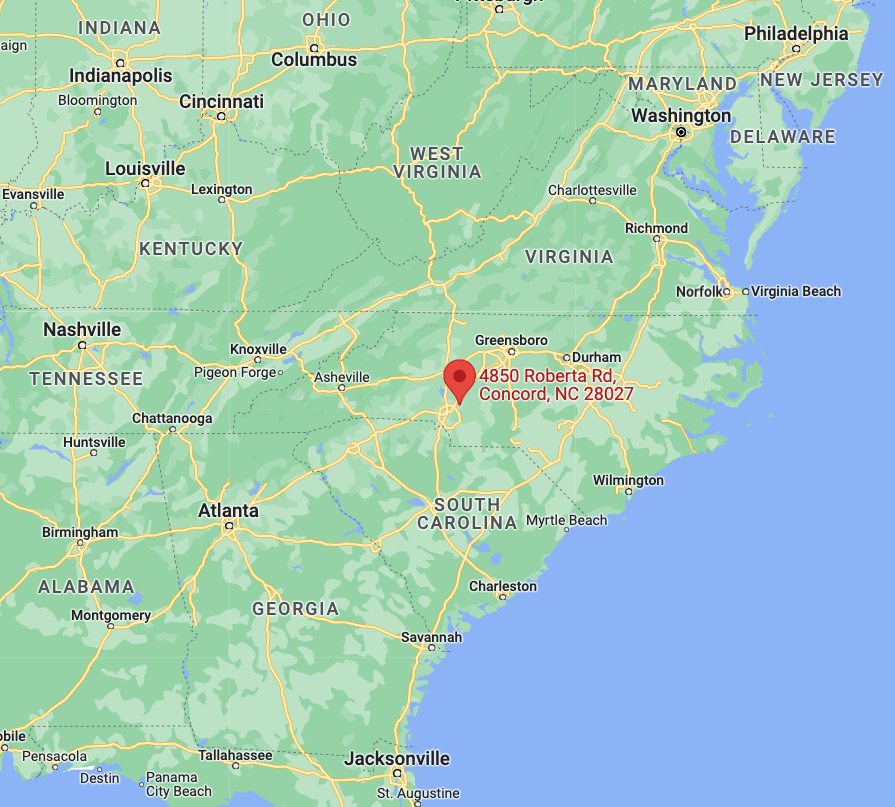
CABARRUS COUNTY, N.C. (WBTV) – Cabarrus County Schools (CCS) will open their ninth middle school to the public on Monday, Aug. 22nd, with a 2pm dedication ceremony at Roberta Road Middle School. Public tours of the new facility, located at 4850 Roberta Rd, Concord, North Carolina will begin at 3pm.
The 1200-student facility, designed by Concord’s Yates Chreitzberg Hughes Architects and delivered by Construction Manager-at-Risk firm Shelco, LLC, will open to students on August 29th. The school features 190,000 square feet of administrative, dining, arts, media, athletics and classroom space.
“I’m honored to have the opportunity to serve as the principal of this beautiful school,” said Roberta Road Principal Kristy Bullock. “The open design and collaborative learning spaces in this school support my philosophy about student learning.
“We are home to a Mandarin and Spanish language immersion program that is being phased in beginning with our 6th graders. We are also delivering instruction through the Participate Learning Global Leaders Framework. We’re very excited to watch our Raptor Family live out our motto as we “Work Hard. Grow Together. Change the World.”
[Note: This is the school featured in the New Yorker article that was published last week.]
Yu Ming Charter School was founded in 2011 in Oakland, California and was the first Mandarin immersion charter in the state.
The tuition-free public charter school is open to all residents of California and serves students from Kindergarten through 8th grade. It is ranked #7 Elementary School and #2 Elementary Charter School in California by U.S. News and was a 2019 National Blue Ribbon School of Excellence and a 2020 California Distinguished School.
Last year Yu Ming leapt from three Kindergarten classes to six, and continued to field six classes for the 2022-2023 school year. In a release, the school said “These additional classes allow Yu Ming to serve more Alameda County families, and most importantly, provide access to more historically underserved families than ever before–a crucial cornerstone of our commitment to offer a transformative public education.”
This year the school also created a Dean of Student Culture, a new position created to help address the social-emotional needs that came out of the COVID pandemic, especially with the school’s youngest students.
Chief Academic Officer Celia Pascual explained in the release, “When our students came back in person full-time last fall, we quickly noticed that this group of young learners needed more support with social skills. Pre-COVID, those skills would have been learned in preschool, playdates, or simply by interacting freely with other children and adults.”
After 11 years, the school now has graduates who come back to work in its summer program when it offers a two-week Summer Boost program that provides extra support in English and Mandarin for students. New to the program this year was a team of nine volunteer alumni.
“I miss Yu Ming and I like working with children,” said Lynnsy ‘20. Alumni from Yu Ming’s four cohorts, 2019 through 2022, volunteered. “I used to have trouble and now I’m really good at English so I like helping other students,” said Ket ’19.
The school collaborates with other Mandarin immersion programs across the country to share expertise and develop innovative practices.
Each spring Yu Ming’s 7th graders participate in a two-week study tour to China. In addition to cultural and historical study around China, students spend five days with an innovative bilingual school in Ningbo, China. Using their Chinese skills in an immersive way, students develop a deeper understanding and connection with Chinese culture.
During their time in China, students:
Participate in Chinese middle school classes
Experience dorm life
Collaborate with Chinese 7th graders in a design-and-build challenge
Stay with host families to experience Chinese home life.
Engage in community service for a local village school
The school has three campuses:
Main Campus (Lower School): 1086 Alcatraz Avenue | Oakland, CA 94608 MLK Jr. Campus (Upper school): 675 41st St | Oakland, CA 94609 Carolyn Campus: Kindergarten – 2nd grade, 16244 Carolyn St | San Leandro, CA 94578
It’s a long and fascinating article that will resonate with many Mandarin immersion parents. Kang touches on something that I wrote about in my book, A Parent’s Guide to Mandarin Immersion, which I glossed as “No one puts their child in Mandarin immersion by mistake.” Read his piece and see if you agree.
Yu Ming, then, presents a different form of élite academic education. Unlike test-in magnet schools like Stuyvesant or Bronx Science in New York City, Yu Ming does not screen its students, except to insure that a certain percentage of them come from low-income backgrounds. The school is free and open to everyone in the state of California, with preference given to local students. All you have to do for your kid to receive the best education in the Bay Area is put them in a classroom where their teachers will not speak English for most of the school day. But the people who are willing to do that and push for their child to go to a charter school will always be a self-selecting group, regardless of their class or ethnic background.
SAN FRANCISCO (AP) — Three decades ago, finding opportunities to learn Cantonese in San Francisco wasn’t hard. But today in the city that’s drawn Cantonese speakers from South China for over 150 years, there’s fear that political and social upheaval are diminishing a language that is a cultural touchstone.
The Chinese government’s push for wider use of Mandarin— already the national language, spoken by 1 billion people — along with the country’s changing migration patterns have contributed to an undeniable shift away from Cantonese. It’s a change that has reverberated from East to West.
From the United States to the United Kingdom and beyond, there’s worry among native and second-generation Cantonese speakers about preserving the language, spoken by some 85 million people worldwide. They fear their children can’t communicate with elderly relatives. Or worse, the Cantonese language and culture won’t survive another generation.
Students in the Mandarin language programs at PBMS had a taste of the Mid-Autumn Moon Festival on Sept. 7 and 8 as they prepared and then feasted upon their own mooncakes. A rich pastry typically filled with sweet beans, egg yolk, or custard, mooncakes are traditionally eaten throughout the autumn festival, which is based on the legend of Chang’e, the Moon goddess in Chinese mythology. PBMS Mandarin language teacher Yan Yan and parent volunteers provided the baking supplies and instruction (delivered in Mandarin, of course) to groups of students enrolled in either the Mandarin immersion program or the introduction to Mandarin language classes. Cultural activities such as this one incorporate Mandarin reading, writing, and speaking skills and also (literally) add flavor to classroom learning. Yan hopes making mooncakes becomes an annual tradition at the school.