I’m seeing lots of Mandarin programs being cut due to budget deficits, not just in Canada. What’s confounding is that Chinese immersion programs are often oversubscribed, so it would seem you might want to keep them. I don’t know that they’re more expensive that other types of programs, teachers aren’t paid more in most districts for working in bilingual programs. Any thoughts?
Burnaby mom fights to save Mandarin program as school district deals with deficit
As the Burnaby School District faces a $4.2 million budget shortfall for the next school year, a mom is fighting to save programs at her daughter’s elementary school, including Mandarin language education.
The district is considering a broad range of cutsto deal with its deficit, affecting things like elementary band, libraries, advanced learning, and counselling.
Parent Denysa Leung is worried about the Mandarin Language Arts program at Forest Grove Elementary, where her daughter is in Kindergarten.
(click on the link below and you can hear the story)
Emily Feng March 25, 2025
STEVE INSKEEP: When you travel in China – as our team has been doing – you meet a fair number of people who know English. Millions of Chinese citizens have been educated in the United States. They include the top executives of companies, economists, government officials. The president’s daughter attended Harvard University. The flow in the other direction is much smaller, but there is some, even in this time of rising tensions between the world’s two largest economies. So what is it like for Americans who learn the language of a trading partner and rival? NPR’s Emily Feng visited an American elementary school that teaches it.
UNIDENTIFIED PERSON: Anybody want breakfast?
EMILY FENG, BYLINE: It’s Monday morning at the Yu Ying Public Charter School in Washington, D.C.
UNIDENTIFIED STUDENTS: (Speaking Mandarin).
FENG: I hear Mandarin Chinese floating through the hallways of this 700-person school.
Do you want to speak in English or Chinese?
Lukas Wouhib is a 10-year-old student here, and he really wants to speak in Chinese.
(Speaking Mandarin)?
“Why do you like learning Chinese?” I ask him.
LUKAS WOUHIB: (Speaking Mandarin).
FENG: “I like learning Chinese very much because it’s hard,” Wouhib says.
PHOENIX — The Mandarin immersion program at Gavilan Peak School in Anthem is being phased out due to low enrollment, a recurring issue in recent years.
Deer Valley Unified School District Deputy Superintendent Gayle Galligan said a standard kindergarten class is 24-26 kids, and the minimum for an immersion class is 20. But right now, fewer than 10 prospective students are interested in the Mandarin program for the upcoming school year.
“In immersion programs, we go from kindergarten through eighth grade before kids go up into high school,” Galligan said. “If you don’t have a robust kindergarten group of kids over nine years, there is just natural attrition with families moving or making other choices, and so that number in kindergarten tends to dwindle all the way through 8th grade.”
Denver students embrace new languages in immersive education experience
Denver Language School boosts bilingualism by immersing students in Spanish or Mandarin.
9News: Byron Reed April 21, 2025
DENVER — Denver Language School, a K-8 charter school within Denver Public Schools, is providing students with full immersion education in Spanish or Mandarin Chinese, helping create bilingual global citizens from a young age.
The school, which has grown from about 700 students to over 900, teaches approximately 90% of the school day in the target language, allowing students to develop proficiency without relying on translation.
“We do math, also, we do science. We do social studies. We are talking about geography,” said Valeria Minoli, kindergarten immersion Spanish teacher. “Many subjects are only in Spanish.”
Students begin in kindergarten learning either Spanish or Mandarin and continue that language track through eighth grade. The school is adding French to its middle school program next year through a partnership with the French American school.
The U.S. government has implemented a $100,000 feet for H-1B visas, which are meant for highly skilled workers coming to the United States. The previous fee was around $7,500.
Will this impact Mandarin immersion programs? Possibly, but it’s not clear how many teachers come in on these visas.
In the past, many districts made use of teachers from China as part of the Hanban teachers program. However most of these programs have now been ended due to concerns over possible influence by the Chinese government on this program and its teachers.
In addition, teachers sent from Hanban (which has been renamed the Center for Language Education and Cooperation, or CLEC) were in the U.S. on J-1 visas, not H-1B visas. J-1 visas are for participants in “cultural exchange programs.”
It appears that most of the teachers in the U.S. using H-1B visas are more often teaching math and science, though there are very likely quite a few immersion teachers as well – but how many is difficult to know.
The National Education Association estimates that “over 500 public K-12 school districts in the United States collectively employ over 2,300 H-1B visa holders.”
If your district relies on H1-B visa holders to staff Mandarin immersion programs, feel free to reach out to me and I can write about how it’s impacting programs.
Some stories about the program and how it’s impacting schools:
A lawsuit filed by schools includes this immersion program:
“For instance, plaintiff Global Village Academy Collaborative — a public nonprofit that oversees a language immersion charter school network in Colorado — said it cannot afford the up to $500,000 the new policy would cost to hire world language teachers for the 2026-27 school year.”
“In 2014, Telluride kindergarteners began their school careers learning in both English and Spanish through a two-way dual language immersion program.
The goal? To make all students bilingual, biliterate and bicultural, and “close achievement gaps, help our native Spanish speakers, and really help build a multicultural worldview for our native English speakers,” said Superintendent John Pandolfo.
The program depends on H-1B teachers from Spain, Mexico, Colombia and other countries. This year, Telluride has 12 H-1B teachers. That first cohort of kindergarteners is now in 11th grade.”
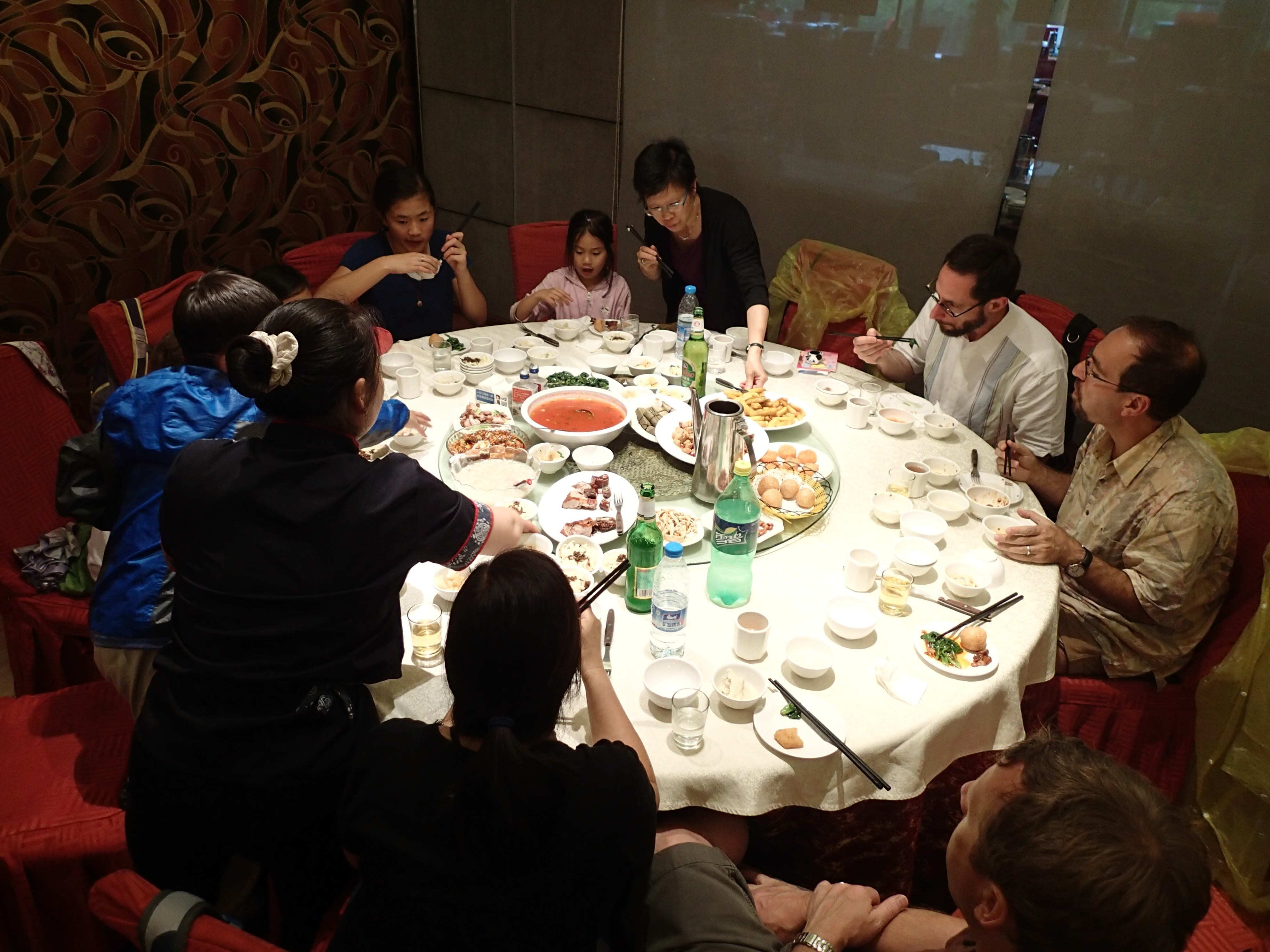
Tim Hurley was part of the beginning cohorts of students in our Mandarin immersion program in San Francisco. For years he ran a really great bicycle camp for kids and of course he’s been to China with families from Starr King Elementary and other schools. So he’s a great guy to organize this. They’ve got Mandarin immersion teachers coming along to help facilitate actual Chinese use along the way. I don’t do much advertising on this blog, but for Tim I’ll make an exception because I know he’s creating exactly the kind of trip our families got to take when our kids were young. The photos are from the trip our youngest daughter’s class took to China.
OLYMPUS DIGITAL CAMERA
Mandarin Immersion family trips to China
Gather your family! Gather your friends and classmates! Enhance your child’s Mandarin Immersion education with hands-on learning at the source: China. Two Mandarin Immersion oriented travel opportunities have been planed for the MI community, scheduled for 6 – 19 June 2026 (rescheduling to 13 – 26 June may be possible to accommodate later school schedules). Details are available and reservations are being accepted through 15 Dec. Space is limited, but the fun and adventure are not.
Ancient Capitals of China This is the perfect introductory trip to the country and culture of China. This trip will explore past and present political and cultural capitals of the country, from Beijing to Datong to Pingyao to Xi’an. Not to be missed highlights include Bejing’s historic Forbidden City, two contrasting areas of the Great Wall, the stunning Yungang Grottoes of Shanxi, and the Terracotta Warriors and ancient city wall of Xi’an. This trip is perfect for first-time China travelers and families with younger kids (rising 4th grade and younger), though any experience level and age is welcome.
Great Wall and Hexi Corridor Dive into Chinese history with an exploration of the Great Wall and a stretch of the Silk Road. With hikes on both restored and “wild” segments of the Wall, and a travel route that parallels the westward reach of the Wall to its terminus at Jiayuguan Fortress, this trip will reveal the many characters of the Great Wall and the regions it protected. From cultural icons to natural wonders, this itinerary explores the impact of the desert and loess plateau on the history and development of China, and beyond. This trip includes longer travel, less developed destinations, and physical activity, and may be better for experienced China travelers and those with older kids (rising 5th grade and above).
The two trips will run simultaneously and overlap in Xi’an to ensure opportunities for sharing stories and meeting up with friends. It is intended that a MI teacher will accompany both trips to assist with language skills practice and cultural instruction. Scheduled and spontaneous opportunities for engaging in language and cultural exchanges with native Mandarin speakers are embedded in both itineraries. In-country travel will include high speed rail, tour bus, and airplane. Hotel accommodations will be four star. Opportunities for free time and independent exploration are included and encouraged.
These trips were organized by Access Asia Tours, a travel company specializing in Asian tourism and bespoke itinerary planning. Tim Hurley, a San Francisco-based former MI parent, designed the itineraries and will serve as on-trip liaison. Tim has traveled to China on numerous occasions, as a student, professional, MI parent, and adoptive parent. His family was part of the pioneering San Francisco public school MI cohort, with two daughters leading the way through the elementary-middle-high school pathway.
No English allowed: Inside Honolulu’s bold new classrooms
Story by Sandy Harjo Livingston
HONOLULU (KHON2) — In classrooms across Honolulu, bilingual education is reshaping how students learn, connect and see the world.
At Kamehameha Schools, Maryknoll School and St. Louis School, language is more than a subject. It’s a tool for global citizenship and cultural understanding.
Mandarin immersion takes root at Maryknoll
Maryknoll School launched its Mandarin immersion program nine years ago. For Shana Tong, president of Maryknoll, it was a natural extension of the school’s global mission.
“Our first class, the current 8th grade, started in kindergarten,” Tong said. “You spend 50% of your day in only Mandarin. They don’t even know their teacher speaks English.”
The program follows a 50/50 model in the early grades. Students learn core subjects like math and science in Mandarin, then switch to English for literacy and religion.