KAWC | By Howard Fischer, May 30, 2024 Capitol Media Services
PHOENIX — State schools chief Tom Horne has been ordered to pay more than $120,000 in legal fees over his unsuccessful bid to quash dual-language instruction in Arizona schools.
The new order comes more than two months after Maricopa County Superior Court Judge Katherine Cooper ruled that Horne had no legal authority to force all Arizona schools to use only “structured English immersion” to teach the language to students who are not proficient.
More to the point, Cooper said nothing in state law even allowed Horne to go to court and ask her to declare that schools districts are violating a 2000 voter-approved measure dealing with English instruction. Any such right, she said, actually belongs to the state Board of Education.
Judge dismisses State Superintendent’s English Language Learner suit
Arizona Mirror, March 2024 A lawsuit launched by Arizona schools chief Tom Horne last year in the hopes of shutting down dual language instruction across the state was tossed out of court on Friday.
Maricopa County Superior Court Judge Katherine Cooper, in a 14-page ruling, offered a blistering criticism of Horne’s complaint, repeatedly stating that the Superintendent of Public Instruction has no authority or standing under Arizona state law to challenge the teaching model.
“Simply put, no Arizona statute grants the Superintendent an open-ended general grant of authority to sue,” she wrote.
An interesting article from western Massachusetts, where the school superintendent of the Amherst-Pelham School District is concerned that a Spanish immersion program at a district school is a school within a school which creates “a troubling level of segregation based on language proficiency” as the local newspaper put it.
It’s interesting because the program they’re talking about offers Spanish immersion, which in my experience districts are not typically as worried about. Spanish immersion programs tend to attract larger numbers of Latino students, which contributes to diversity. Mandarin immersion programs can be more problematic because they are tend to have higher percentages of white students (in areas where there aren’t a lot of Asian families) and can be attacked as elitist.
And as I tend to say ad nauseam, language immersion programs are often (though not always) put in a public school to do two things: provide important language support for immigrant families and to attract families to a school that is either under-enrolled or struggling. They’re a win-win for districts because they can fill and invigorate schools that were under-enrolled or even on closure lists (see Starr King Elementary in San Francisco, Woodstock Elementary in Portland, Broadway Elementary in Los Angeles.)
Note that several of the parents interviewed in the article said the Spanish immersion program was what attracted them to the district. In a time when districts are facing dropping enrollment, that’s a win.
But when the programs get very popular, they bring new issues. The English-language program can feel pushed out, the composition of the school changes and the new families can be attacked as destroying the very school they were originally pulled in to save (see Starr King Elementary in San Francisco, Woodstock Elementary in Portland, Broadway Elementary in Los Angeles.)
What’s fascinating here is that Superintendent Herman suggests a school that’s 100% Spanish immersion (she calls this a “full-school” program) might be better. But many districts reject such whole-school programs because they don’t support struggling schools.
I’d welcome comments from parents in districts where these issues are coming up. What are the concerns of your district? How are they being addressed and how are parents responding?Feel free to email me if you’d prefer not to post.
Amherst parents worry about dual language program’s future at Fort River
From the Daily Hampshire Gazette
October 21, 2024
AMHERST — Families with children enrolled in Caminantes, the dual language program at Fort River School, are raising concerns about whether Superintendent E. Xiomara Herman will support its continuation, after she identified a series of issues with what she is calling a “school within a school.”
With comments from parents and members of the Caminantes Advisory Council provided to both the superintendent and the Amherst School Committee, Herman told committee members at Tuesday’s meeting that she is not considering eliminating the program but wants to grasp its pros and cons.
She said the program has provided better family engagement, cultural competency and academic growth, but also deals with staffing shortages, funding gaps and schedule conflicts. The superintendent also pointed to what she sees as a troubling level of segregation based on language proficiency.
I’ve spent the last two weeks going through the full Mandarin immersion school list and have updated and cleaned it up as much as I am able. There are still some gaps (Examples: Just when was the Baltimore International Academy East founded? Does Triad International Studies Academy in North Carolina use traditional or simplified characters?)
As of today, we have 367 schools with Mandarin immersion programs in the United States.
Here’s the latest list:
To see the list, click the link above. It will download to your computer and you can open the file there. There are also tabs at the bottom for international programs and Cantonese programs.
The number of schools has fallen by 27 since July when I last updated the list However, there’s some nuance to that. Some schools have indeed closed, and I expect we’ll see even more closures over this year as school districts struggle with a decrease in students.
In addition, a number of schools that had been set to open, or in fact did open, ended up closing or never opening in the first place. This was especially true in California, where several Mandarin immersion private schools were announced but never opened. These included Balboa International Education, Cornerstone Mandarin Immersion School, Avenues: Silicon Valley and Green Ivy Silicon Valley. It’s not clear to me if this was related to COVID-19 disruptions or lower interest overall.
There’s also some oddness going on in New York City, with several expensive private schools either not opening or jettisoning Mandarin immersion. That includes Polis Montessori World School and Avenues: The World School. Polis never opened, Avenues is down to only offering Mandarin in K – 5 (and it’s a K – 12 school.) I’ve gone back and forth about Green Ivy International Schools in Manhattan, which only offers between 60 and 90 minutes a day of Mandarin in grade school. That’s not 50% of the day and so it’s really immersion. They’re still on the list but I’m thinking I should take them off.
Why do I think there’s so much movement in the Mandarin immersion world? A couple of reasons:
There’s less interest in Chinese language from American parents. Today, China doesn’t feel like the amazing opportunity and great jumping off place for young Americans that it did ten years ago. Parents don’t seem to be thinking “Wow, if my kid could only work in China when they get out of college, they’d be set,” as they once did.
That said, tides turn and we’ll always need people who are bicultural and comfortable in both languages. When I was in college everyone said Japanese was the way to go and they made fun of us for studying Chinese. Then things changed. They will change again. And China is 1.4 billion people – we need to be able to talk to them!
It’s getting a lot harder to hire bilingual teachers. There were multiple programs through the Chinese Ministry of Education which sent seasoned Chinese teachers to schools across the United States. Those have mostly shut down now, making it difficult to staff new programs.
School districts are realizing that it’s difficult to support programs as they move up through the grades. In many districts, there are classroom size limits for Kindergarten through second grade. So say you can only have 20 students in a second grade class, but that bumps up to 33 for third grade. Suddenly you’ve got two second-grade classes of 20 which is 40 students all told. When they start third grade, classes they’ve enlarge to 33 students, meaning you’ve got one and a half classes. It can’t be done. Which either means Mandarin immersion classrooms have fewer students (which is an equity issue for English classes) or you do a 4th/5th grade split class where you mix them up so you get enough kids in each. But that’s a really hard way to teach and requires expert teachers and lots of support. So hard to pull off.
The “would you like Mandarin with that?” thinking that was prevalent a few years ago has lulled. As parents know, there are always fads in schools. One year everyone wants arts magnet schools. A few years later it’s STEM in everything. (Or STEAM, which is science, technology, engineering, arts and math – which is basically school but don’t get me started….) Next everyone’s clamoring for social-emotional learning with a strong dose of computer science. And project-based learning! Language immersion in general but Mandarin in particular was one of those fads and schools that weren’t strongly committed are moving on to whatever comes next. Lately I’m seeing lots of schools with titles that include “Renaissance,” “Traditional” and “Classical.”
What else am I missing? What are you seeing where you live? I welcome your thoughts.
Shawnee Mission dual language proponents hope idea makes it into next strategic plan
An organized effort to get a dual language program in the Shawnee Mission School District (Kansas) received strong support in a recent public input effort, buoying supporters’ hopes that it might make it onto the district’s long-range strategic plan later this year.
The district is in the early stages of its planning process for a new strategic plan.
At a school board meeting Monday, Leigh Anne Neal, Shawnee Mission’s chief of early childhood learning and sustainability, presented six guiding principles for the strategic plan approved by a 31-member steering committee.
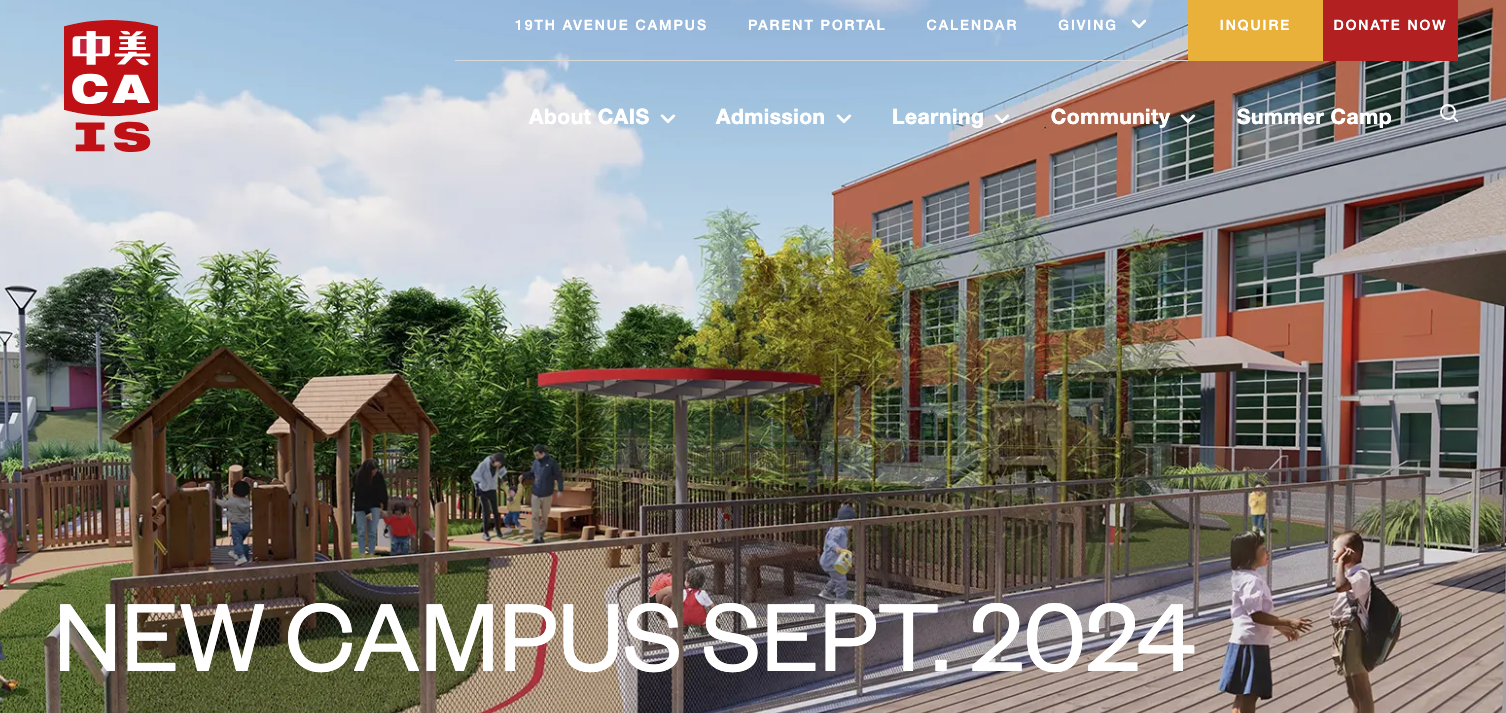
The Chinese American International School, founded in 1981, is the oldest Mandarin immersion school in the country and, as far as I can tell, the world.
It’s long been split between multiple buildings, for preschool, grade school and middle school, to accomodate its growing student population. Until last year the grade school shared a building with the French American International School.
This year, CAIS moved into a new campus on San Francisco’s west side, into the building of the former Mercy High School, a Catholic girls’ school that opened in 1952 and closed in 2020.
CAIS (pronounced “case”) purchased the campus and after two years of renovation, moved in earlier this month.
In addition to having all its students in one place, the school has also added a new strand for incoming middle school students. As its website says, “No Mandarin (Yet?) No problem!”
The Mandarin World Language Pathway allows students to join the school who haven’t studied Chinese. The school’s site says “The Mandarin World Language Pathway program is a much more robust language instruction than students would get in a monolingual school setting.”
This is an attempt to deal with a problem that tends to dog Mandarin immersion programs – it’s impossible to bring in new students after first grade because they can’t catch up to immersion students. This means that class sizes tend to shrink by grades as students move away. Of course, it also means it’s easier to move between Mandarin immersion schools nationally because they’re generally eager to get students in higher grades who have the necessary language background.
The idea of creating a new, middle school path for students without the required language proficiency is one that’s being tried in immersion schools around the country, not just Mandarin but also French and German that I’m aware of.
For example, HudsonWay Immersion School, which has campuses in Manhattan and Stirling, NJ, is now offering an Accelerated Bilingual Cohort in its middle school program.
If you know of schools that have this type of program, please reach out to me and I’ll include them.
There’s also the Stratford School in San Francisco, which is a chain that has some Mandarin immersion at some of its schools, including the one in San Francisco. That brings to five the private Mandarin immersion schools in the city (including the one opening next year) compared with just two public Mandarin immersion schools. As I keep saying, it’s a clear missed opportunity for San Francisco Unified, which will be closing schools this year due to under-enrollment.
From: The San Francisco Standard
Chris Livaccari thought he had seen the rise and fall of Chinese-language instruction in the U.S. over the three decades since he began studying Mandarin. But San Francisco never disappointed him.
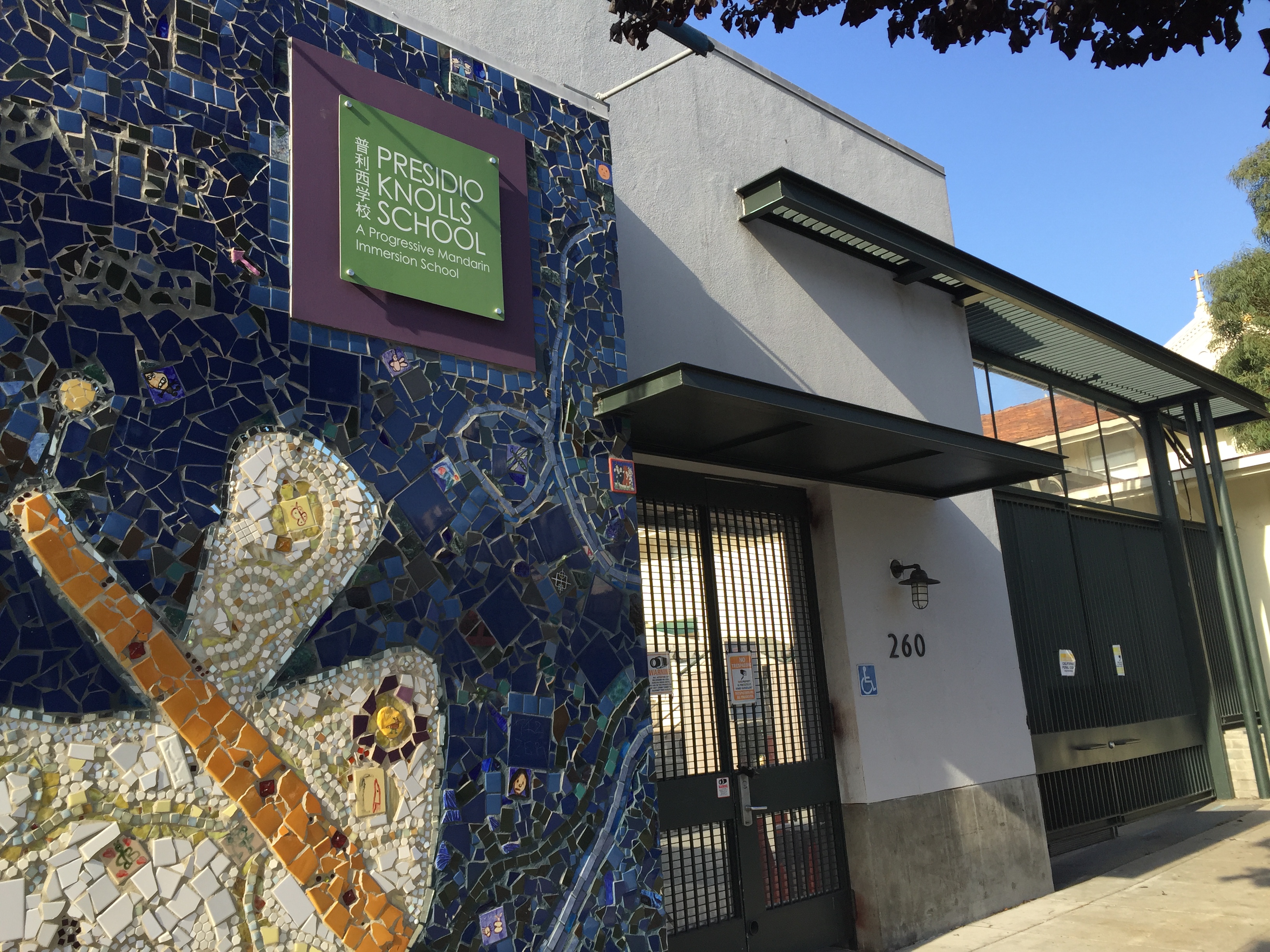
Livaccari, principal of Presidio Knolls School in SoMa, a private immersion facility offering Mandarin programs for preschool to eighth grade, said the student body has increased from 300 to 400 over the past five years.
Peter Hessler’s book River Town came out in 2001. About his years in the late 1990s as a Peace Corps volunteer there, it’s a brilliant portrait of China as it emerged from isolation and was beginning an era of rapid change. He later reported from China and has written several books since, all worth reading. Now he’s published one that will be of special interest to parents whose children are in Mandarin immersion, if they’ve ever wondered “What would this all be like in China?” Your answer will come as you read Other Rivers: A Chinese Education, which came out in August. It covers the two years his twin daughters attended a large public school in Sichuan. I’ve always loved Hessler’s work because while he clearly has deep affection for China and the Chinese people, he isn’t shy about talking about its issues as well.
The exerpt linked to below appeared in The Guardian newspaper.
Our twins spent two years at primary school in Chengdu. Their lessons featured alarming cautionary tales and stories of Chinese superiority, but there was fun and irreverence, too
Near the end of third grade, my twin daughters, Ariel and Natasha, officially joined the Young Pioneers of China. This organisation is under the auspices of the Chinese Communist party, and members are between the ages of six and 14. In order to become a Young Pioneer at Chengdu Experimental primary school, the public institution my daughters attended in the south-western Chinese city, there was no application, no interview and no ceremony. Parents were not consulted or informed. The twins simply came home one afternoon wearing Young Pioneer pins on their right breasts. The pins featured a gold star, a red torch and the name of the organisation – Zhongguo Shaoxiandui – in gold Chinese characters. Ariel and Natasha told me and my wife, Leslie, that from now on they would be required to wear the pins on Mondays, when Chengdu Experimental held its weekly flag-raising ceremony, as well as on other special occasions.




 Mandarin Immersion Parents Council