• I’ve visited HudsonWay and know the staff and program, it’s a great school and I bet their camp, which sounds like a full-on Parent Trap camp but with immersion, is cool. A little easier to get to than China or Taiwan.


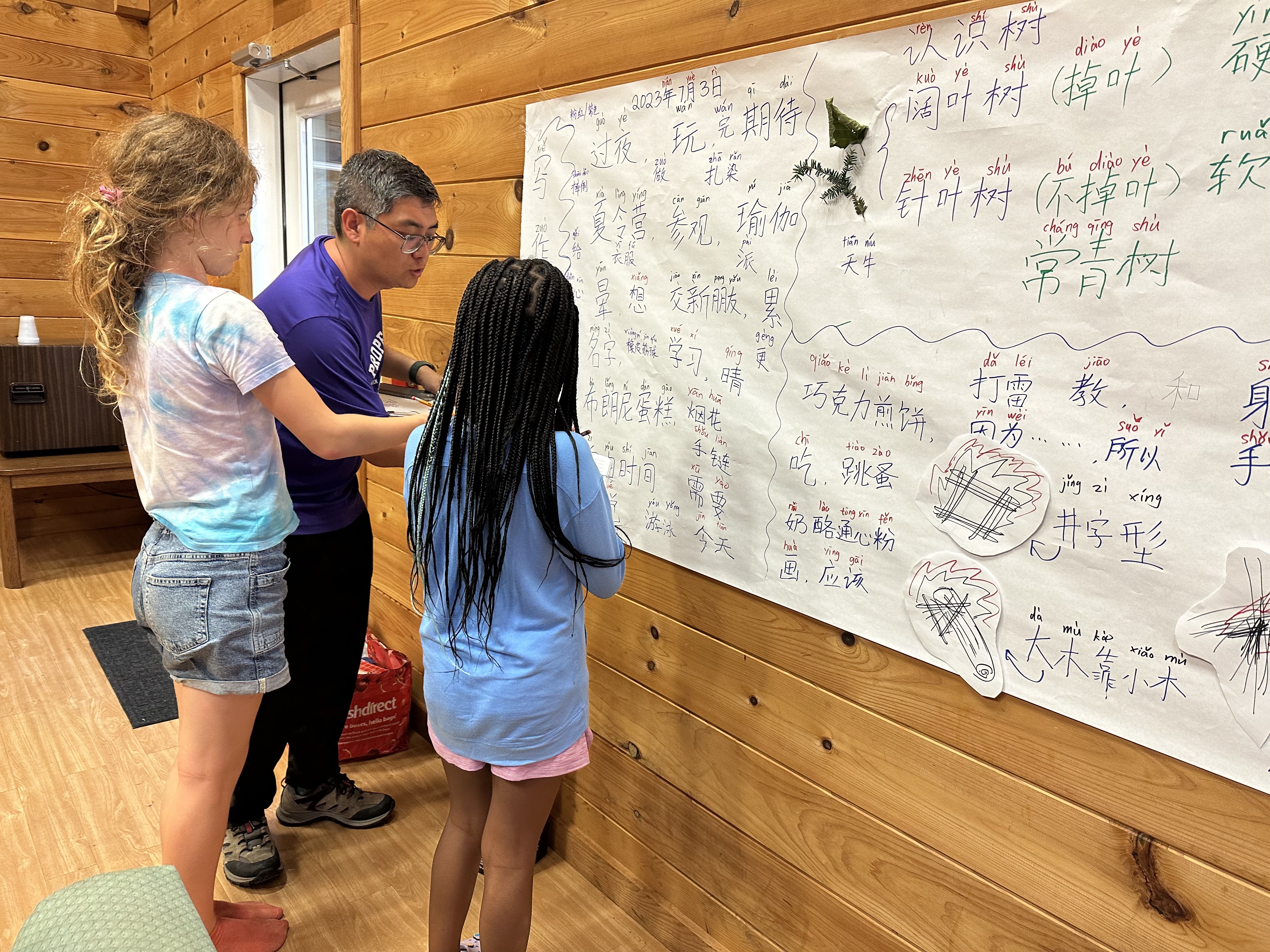
    HudsonWay International Sleepaway Camp

    We welcome students ages 8-13 to experience a 2-week international sleep-away camp on a 220-acre camp in Northern New Jersey. Select 1 or 2 weeks.This camp introduces American students who are learning Mandarin or Spanish to international students from Mandarin and Spanish speaking countries. Students learn together based on their interest in the immersive language and they experience a program focused on appreciation of the great outdoors, personal growth, community building and understanding of other cultures in a traditional camp setting.The immersion experience is designed to provide a 50/50 split between English and the target language. 

    Outdoor exploration, camp activities, language immersion and more!
    Students enjoy discovering pond ecology, tree identification, ornithology, and orienteering while also experiencing traditional camp activities such as canoeing, kayaking, row boating, fishing, ziplining, archery and ropes courses.  Native Mandarin and Spanish teachers deepen the discovery with experiences designed to deepen language skills. Book your spot now and invite your friends to join in the fun too!
    Camp Registration 2024:
    Camp Dates: June 30 to July 13
    Cost: Per student which includes lodging, food, medical insurance, transportation from NY or NJ.
    Week 1: June 30-July 6  $1925
    Week 2: July 7-July 13   $1925
    Pay a deposit of $800 to book your spot now! Camp details: https://hwis.org/international-sleepaway-camp 
  • This is an interesting model for a school with an existing immersion program.

    Beginning in the fall of 2023, Randall Elementary School north of San Jose added Mandarin to its school curriculum. Randall is part of the Milpitas Unified School District

    Randall is the only district school that offers a bilingual Immersion program. The ethnic distribution in the district is 50% Asian, 20% Hispanic, 17% Filipino, 5% White, 2% Black, and 6% other, according to the district.

    When Randall asked its community about adding another language in 2023, 50% (376 responses) of respondents favored Mandarin compared to 26 percent (195 responses) for Vietnamese.

    The Mandarin program kicked off in October 2023 and began with Transitional Kindergarten and Kindergarten. It will expand a grade level each subsequent school year.

    The Mandarin program is not actually immersion.

    Instead, “it is designed to provide exposure to the language through P.E., Art, and Music. It focuses on introducing students to the language and its culture meaningfully by performing activities that engage them. Our approach allows for a balanced integration of Mandarin into their existing educational routine. This method ensures that students can build a solid foundation in Mandarin while maintaining their proficiency in other subjects,” the school said on its website.

    “We worked very hard to get as much wide-ranging community input as possible,” said Randall co-Principal Kristan Prolo, who was joined by Priti Johari, Executive Director, Learning and Innovation; Yvonne Sugimura, Coordinator II English Learners, Literacy & Intervention Services; and Claudia Cadenas, co-Principal, Randall World Language School in presenting their Randall World Languages Third Language Report.

    In May of 2021, the MUSD Board of Education approved the integration of a third language at Randall World Languages School. The steering committee then completed the process of soliciting community feedback to determine the third language and came to the recommendation of Mandarin as the third language.

  • Delaware’s state-wide immersion program includes 13 schools with Mandarin immersion programs with about 1,300 students.

    Delaware Public Radio

    By Larry Nagengast  

    With nearly 10,000 students currently enrolled and new grades still being added, Dual Language Immersion (DLI) programs are solidifying their position in Delaware’s public-school landscape.

    Announced in 2011 by former Gov. Jack Markell and launched as a pilot program in three schools the following year, DLI programs offering either Spanish or Chinese are now operating in 12 of the 15 school districts that serve the elementary grades (all but Lake Forest, Laurel and Woodbridge). Two charter schools, Las Americas Aspira and Academia Antonia Alonso, offer Spanish immersion, and Odyssey Charter has the state’s only Greek immersion program.

    Growth has been steady – from the original three schools to 29 in 2017 to 57 this year. Spanish is offered in 46 schools to about 8,500 students, Chinese in 13 to about 1,300. (Three schools offer immersion in both languages.)

    Please read more here.

    Some info here on the Delaware language immersion model.

    Resources for the Delaware DLI Model

    The resources linked below provide additional information and details about the Delaware Dual Language Immersion Model, K-12 program articulation, and implementation expectations:

  • EdSource By Ali Tadayon, March 8, 2023

    By popular demand, West Contra Costa Unified will expand its landmark West County Mandarin School from grades K-6 to TK-8 in the 2024-25 school year.

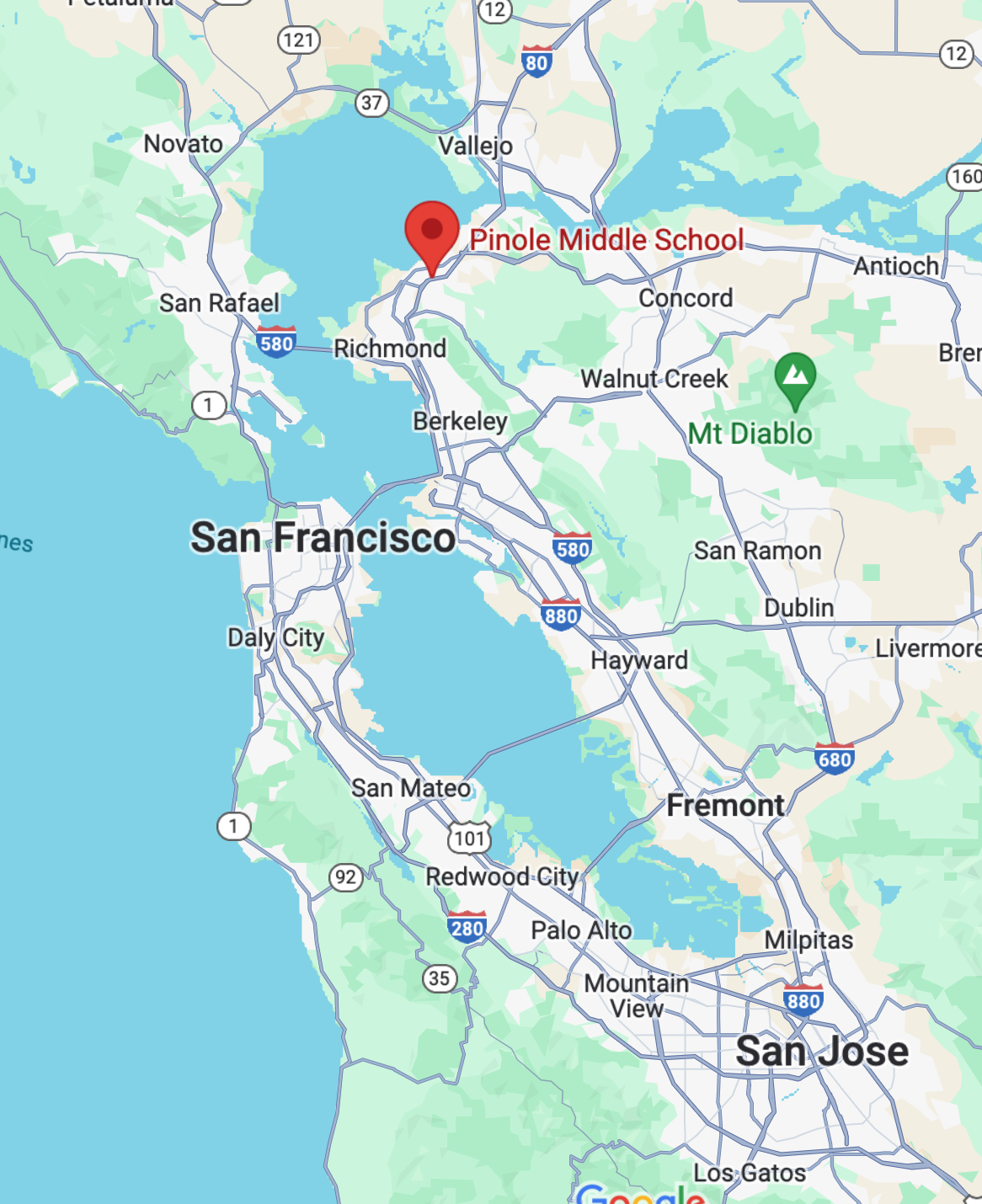
    West County Mandarin School was initiated in 2016, and is the first Mandarin dual immersion public school in California to be authorized as an international baccalaureate school. The district’s school board, at a meeting March 1, unanimously voted to expand the program to include grades seven, eight and transitional kindergarten.

    While community members enthusiastically welcomed the expansion, not all agreed on the district’s plan for locating the school. The school is currently housed at the Pinole Middle School campus, but needs more room to accommodate the additional students. Some parents have urged West Contra Costa Unified to move the school back to its original location at the district’s Serra campus in Richmond, which they said is a more central location for families since the school enrolls students from all over the district.

    Please read more here.

  • Like many Mandarin immersion programs (and immersion programs overall), Sacramento, California’s seven dual-language immersion programs do a great job through fifth grade. The district offers one Mandarin program, one in Cantonese, one in Hmong and four in Spanish.

    As this Sacramento Bee article says, everything stops in middle school:

    “While the elementary school programs are a “great experience,” kids are left unsupported once they graduate, parents said. With no higher level Chinese or Hmong classes in middle school, parents are left to figure out themselves how to continue supporting their kids’ language learning, bridging the gap to high school classes or an AP test.”

    [Note that the linked article above requires a subscription. Sorry about that, but it is a good thing to pay journalists for their work….)

    Sacramento parents there are trying to fundraise and advocate for program expansion to offer some middle school immersion classes but it’s not clear the money will be forthcoming from the district.

    This isn’t just a problem in Sacramento. In San Francisco, students in the district’s two Mandarin immersion K-5 schools get a 6th grade Social Studies class taught in Mandarin and then are offered “intermediate Mandarin world language” in 7th and 8th grade. Then when they get to high school, they can take the AP Chinese test in 9th grade. In a few of the district’s 17 high schools, there are more advanced Mandarin classes available. Unfortunately, access to high school is by lottery, so a Mandarin immersion student has no certainty that they’ll be assigned a school that offers Mandarin at the appropriate level.

    These are just two of many examples. Our K-5 programs do an excellent job, but then there’s nothing for far too many Mandarin immersion students when they get to middle school. And then four years later, when they get to high school, they’ve had time to forget a fair amount and, at best, they’re offered an AP Chinese course and nothing more.

    Granted, there are districts that do a great job of articulation (education jargon for a program that progresses in a logical and reasonable sequence. Delaware and Utah do this quite well for their entire state.

    And northeast of San Francisco in Contra Costa county, the school district just voted to extend its very popular K – 5 program through middle school.

    But for too many schools and too many families, immersion is a road to oblivion. There’s no follow-through after fifth grade and school districts act as if it’s a surprise that anyone who’s kid has worked hard for six years to master a new language would want something that builds on that, rather than wasting all their effort until they can get to high school – where only a year’s worth of classes are available to them because they’re too advanced for Mandarin 1, 2 and 3.

    Tell me your stories – what does your district do for middle and high school? How well does it work? What do students do when they get to college?

    I’ll report back when I hear more.

  • There are two national conferences of interest to Mandarin immersion teachers and administrators and both are taking place this year.

    One is the Asia Society’s National Chinese Language Conference, which this year is happening on May 2, 2024, in Mountain View, California. It’s the 17th annual conference this year and registration is open.

    The other is the International Conference on Dual Language and Immersion Education, which is hosted by the University of Utah in Salt Lake City and takes place every other year.

    Utah is the hotbed of K-12 immersion education, with more programs than any state and one of the best built-out systems anywhere (with the possible exception of the city of Edmonton in Canada.)

    Registration just opened for the Utah conference, which is their ninth. So tell your teachers and administrators.

    Note that while I have on occasion attended these as a total immersion nerd, they’re probably not of that much interest to parents unless you’re really interested in the minutia of immersion and what the latest research and techniques are.

  • Lake Oswego Review, By Mia Ryder-Marks, Jan. 7, 2023

    Starting in September 2023, students at Palisades World Language School will be walking the hallways and chatting with their friends in English, Spanish and Mandarin Chinese.

    This fall, Palisades will add a Mandarin Chinese language program to its roster, which already includes Spanish, for kindergarten and first grade students. Christy Appleberry and Vicki Yang are teachers and immersion program facilitation partners who are developing and constructing the new language program. They said the textbooks for students just arrived and they are excited for students to finally crack them open come next fall.

    “I’m very excited that our school is going to be a super diverse community. We can’t wait to hear kids in the hallways speak not only Spanish (but) Chinese, English and other different languages. It will be a very unique place for kids to grow up surrounded by so many languages,” Appleberry said.

    The new language program will mirror its Spanish counterpart. Students will take their core classes — math, English, history and science — with Mandarin Chinese incorporated. Students will also take Chinese language literacy courses.

    Please read more here.