A growing town in North Carolina’s famed Research Triangle of universities and research institutions could become home to not one but two Mandarin immersion schools, one public and one charter. It’s an example of the interest in language immersion and also school districts’ realizing that immersion programs keep families in district.
On February 18, 2020, the Wake County school board voted to add three new magnet schools, two Spanish immersion and one Mandarin immersion, to compete for pupils leaving for charter schools and private schools.
According to the district, the new program would include:
K-8 language school eliminating transition between 5th and 6th grade year, providing nine years of continuous support to all of students
Full Chinese Immersion K-5
Serve English native speakers in an environment where Chinese is exclusively used, Chinese content taught in four core classes (literacy, math, science, social studies)
Students become bilingual, biliterate and bicultural
Students become equally proficient in both Chinese and English
Chinese and Spanish offered for non-immersion students as a daily language for K-5 students
Chinese immersion continued in Chinese literacy and one core course in 6th-8th grades
Chinese and Spanish language offered daily for 6-8 non-immersion students
Core and elective classes taught through a global lens
How the move will be affected by the coronavirus is unclear.
At the same time, a group of parents is working to launch the CE Academy: Chinese-English Bilingual Charter School, in August of 2021.
According to the group’s website, “students in grades K- 2 will receive 70% of instruction in Chinese and 30% in English. Teachers will teach each subject, including Chinese language arts, math, science, music, arts, PE and technology, in Chinese, except for English language and social studies (which will be taught in English). For students in grades 3-5, the portion of Chinese-mediated instruction will decrease to 50% so the students will have balanced exposure to the two languages.”
When the morning school bell rang, students in the halls of the International School of Indiana’s lower school building hurried into their respective classrooms. The elementary classrooms bustled with the sound of students chatting with one another as they get settled in for the day.
Unlike other classrooms across the state, these kids aren’t speaking English.
In one kindergarten class of about 12 students, Claudia Rodriguez leads the kids in counting. Rodriguez is from Monterrey, Mexico, and has worked as the ISI kindergarten Spanish teacher since 2015.
Another class of kindergarteners listened intently to their teacher, Wenjie Lyu — who is originally from Liaoning Province in China — as she speaks to them in Mandarin. And her students responded in the same language.
This atmosphere is a daily occurrence at ISI.
Language immersion schools positively affect intellectual growth and lifelong communication skills — particularly if a child is enrolled from a young age, according to research conducted at institutions such as the University of Minnesota and the University of Maryland. These schools also provide children with the asset of fluency in multiple languages once they enter the job market.
Once again, it makes me so envious of Utah and its fabulous, and fabulously articulated, immersion program. Here in San Francisco, they’re busy dismantling the immersion program, which no longer exists in high school and won’t exist much longer in middle school. While in Utah they are strengthening and building their program out.
The District offers immersion in Portuguese, Chinese, Spanish and French. (The diagram above doesn’t include French because they have so many programs and so many schools they didn’t all fit on the same page….) And from 10th through 12th grade students do university-level coursework.
Kudos!
Alpine School District’s first set of Chinese immersion students enter high school
Alpine School District’s first set of Chinese dual language immersion students aren’t so little anymore.
The group, who started at Cascade Elementary School in Orem, are now at Orem High School, earning college credit for their work and forming international bonds.
The students’ first year at the high school has involved setting up the process for a sister school in China, along with a trip to the Suzhou Foreign Language School in Suzhou, China, for the 1st International Youth Summit.
“I think it was such a great success,” said Alan Heath, a Chinese teacher at Orem High School.
The trip was the first time a group from the school has gone to China, according to Heath. The school will attempt to do another trip next year.
Heath has taught world languages at the school for four years. This year he’s teaching Advanced Placement Chinese, which gives students an opportunity to earn college credit if they pass a national test at the end of the year, and the bridge class, where students who have passed the AP exam can gain college credits while still in high school. The dual-language students should have received enough college credit by the time they graduate high school to have earned a minor in Chinese.
Even if your children have never set foot in California, if they’re in a Chinese immersion program chances are their education has been guided by Kevin Chang in some way. He has been at the Chinese American International School in San Francisco for 22 of its 40 years. Chang has taught workshops at multiple Chinese language conferences over the years, training hundreds of teachers who have gone on to work around the nation and around the globe. The headmaster of CAIS, Jeff Bissell, penned this essay about all Chang has done — and all he’ll continue to do from his new position as Director of Chinese studies at the Hong Kong International School.
Kevin Chang, Chinese Program Director at San Francisco’s Chinese American International School. He will become Director of Chinese Studies at Hong Kong International School in the fall of 2021.
By Jeff Bissell
A global pandemic. Deteriorating air quality from the now annual wildfires. In recent days I have asked my colleagues, somewhat rhetorically, “What next? Locusts? Killer wasps? A pack of emboldened coyotes roaming Hayes Valley?” Head of Middle School Joe Williamson informed me that a puma had been spotted in his neighborhood recently….
I am writing with less dramatic but nonetheless impactful news. Chinese Program Director Kevin Chang has told me that he will serve to the end of the current 2020-21 school year, but that this—his 22nd—will be his final year at CAIS. For a few years running Kevin has spoken to me about the possibility of taking early retirement and returning to Taiwan where he could rejoin his family. I knew the day would come when he would make good on his plan to head back to Asia, but it has taken an interesting twist. Kevin was recently contacted by the Hong Kong International School (HKIS) who, after a year-long search for a Director of Chinese Studies and World Languages, offered Kevin the position. This puts Kevin 70 minutes by air from his family in Taiwan. HKIS is fortunate indeed to snag someone as talented, experienced, and gracious as Kevin Chang. Kevin’s family is, of course, delighted. Kevin himself is feeling equal parts happy and sad at once—he has called CAIS his “second family” for 21 years. I am sad and, of course, grateful to have had the opportunity to work alongside him for the past 10 years—and the year to come.
If there is a person whose name is synonymous with Chinese immersion and with CAIS, it is Kevin Chang. In his more-than-two-decades career here, Kevin has served as a classroom Chinese teacher, Lower School Director, and for the past nine years as Chinese Program Director—a position that did not exist when I arrived in 2010 but that Kevin has defined, not just at CAIS, but nationally and internationally. Kevin is one of a small number of elite Mandarin immersion leaders in the US and internationally. He has delivered dozens of presentations at conferences around the country and the world. He is a sought after foreign language program evaluator and has worked nationally and internationally assessing Chinese language programs—including at HKIS. Kevin is the originator of two national-level Chinese language conferences: the Early Childhood Chinese Immersion Forum held annually at CAIS and the Chinese Innovation Forum, a collaboration with Middlebury Institute of International Studies-Monterey. He has authored articles and book chapters for the Asia Society’s Chinese Early Language Immersion Network (CELIN). Kevin has also been a major player in the federal STARTALK program, and each year he brought the most talented immersion leaders from around the country to CAIS for a week-long, federally-funded teacher training program that has impacted scores of Chinese teachers.
Here in Hayes Valley, Kevin has overseen multiple initiatives and innovations that have made CAIS a national and international leader in Mandarin immersion education. At CAIS we are known for our successful integration of Chinese and English curricula, and the collaboration between our Chinese and English speaking faculty is the envy of the immersion world. Kevin is fond of saying, “We do not have Chinese and English curricula, we have a single CAIS curriculum—some is taught in English and some in Chinese.” Kevin’s English curriculum counterpart, Cristina Calcagno, has playfully called Kevin her “work spouse,” underscoring how their tight, collegial bond closely mirrors the integration of our language programs. CAIS has the most robust assessment program of any Chinese immersion school in the country. Under Kevin’s leadership the majority of our Chinese teachers have been trained and certified by the American Council on Teaching of Foreign Languages (ACTFL) to administer and score the Oral Proficiency Interview (OPI) and the Writing Proficiency Test (WPT). Kevin has introduced a number of other external assessments and evolved CAIS into a data-informed program that has seen consistent improvements in student achievement year after year. Kevin has also been a crusader for DEI initiatives and played an important role as a bridge in that area for our Chinese language faculty and staff who were born and raised outside the US. Perhaps most importantly, Kevin will be remembered for his humble, respectful, and courteous manner by all those with whom he works.
Zhaoting Xia sits at the front of her classroom at Cpl. Michael Middlebrook Elementary School in Lafayette, facing a group of kindergarteners while holding a basket of fake fruit and veggies in her lap.
The 29-year-old teacher holds paper copies of Chinese currency and invites kids up one at a time to use the “money” to purchase something from her pretend fruit stand.
All of this takes place in Chinese.
Xia is one of five Chinese immersion teachers at Middlebrook, home to the first such program in Louisiana. All five teachers are from China. Two are visiting teachers, like Xia, who can be contracted for up to three years. Two are local residents.
Louisiana’s only other Chinese immersion program is offered at Baton Rouge Foreign Language Academic Immersion Magnet. LeBrun said it has a similar enrollment to Lafayette’s program.
February 28, 2020 marks the 15-year anniversary of the first class of 5 students that Sharon Huang held in her Maplewood home in 2005. As an international marketing executive and a mother of then 1-year old twins, Sharon understood the importance of global skills and the need to begin this learning as early as possible. Since then her journey has touched the lives of over 2000 children and spawned a groundswell of similar programs in New Jersey, New York and in other cities across the country.
Sharon’s belief in the concept was founded on the convergence of three trends: 1) the growing understanding that immersing a child in a second language has cognitive benefits enabling children to outscore monolinguals in standardized testing, 2) the increasing need for global skills in the workplace, and 3) the interest of parents in investing earlier for quality child care for greater benefits later in life.
HudsonWay Immersion School, a Preschool to Grade 8 Mandarin and Spanish immersion school, made its reopening plan for 2020-2021 available to its community and the public this week. As a smaller school in a facility that can normally accommodate twice as many students, HWIS can safely socially distance at 6 feet, and has been working towards this plan since the Spring. Parents are offered a choice of on-site schooling 5 full days a week or remote learning.
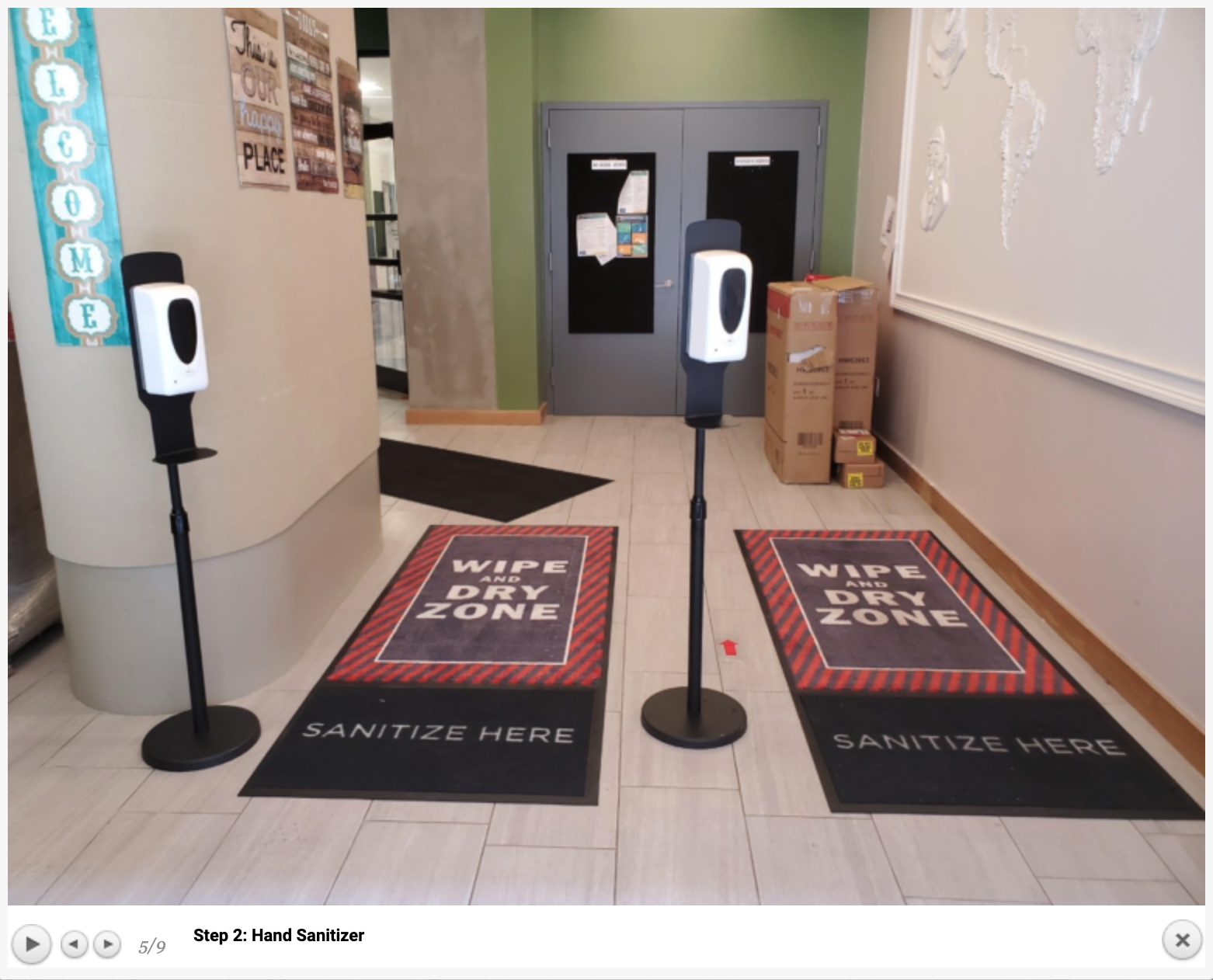
“Whereas larger school districts and other private schools have had to figure out what hybrid models would work, we are in a situation in which we were able to spend our time and efforts preparing for a safe return of all our students 5 days a week,” said Sue Ha, Head of School. “We have upgraded our air filters, installed touchless soap and paper towel dispensers, purchased electrostatic sprayers, PPE, and special cameras to support hybrid learning among efforts. We are committed to making this transition as comfortable and safe as possible.”
Students at HWIS learn the same academic content taught at top tier public and private schools, but in two languages — (1) English and (2) Mandarin or Spanish. Students can enter in the elementary grades without prior language experience and become bilingual after one year. Many middle school students achieve language proficiency capable of scoring 4’s or 5’s on AP tests and positioning themselves to earn the Global Seal of Biliteracy, a distinction recognized in New Jersey, New York, and 38 other states. HWIS has the reputation of developing academically strong students who surpass independent school norms on the ERB assessments and get accepted to top tier independent schools in NJ and NY.
HudsonWay Immersion School (HWIS) is a full immersion Mandarin and Spanish school serving children ages 2 through grade 8. The school is located on two campuses – Stirling, NJ and Midtown West, NYC.
The Asia Society’s Center for Global Education has a nice page of videos showing teachers teaching in Chinese classes across multiple grades. Even if you don’t speak Chinese, it gives you a flavor of what goes on in these classes, with some English commentary on the teaching interspersed.
And if you’re a parent contemplating a Mandarin immersion program for your child, here’s a chance to see what it looks like not just for five minutes touring a school, but for a full hour-long lesson.
Here’s the page that lets you choose among videos.



 Mandarin Immersion Parents Council