Most of us with students in Mandarin immersion can’t read to our kids in Chinese, or play games with them in Chinese or do much beyond making sure they do their homework.
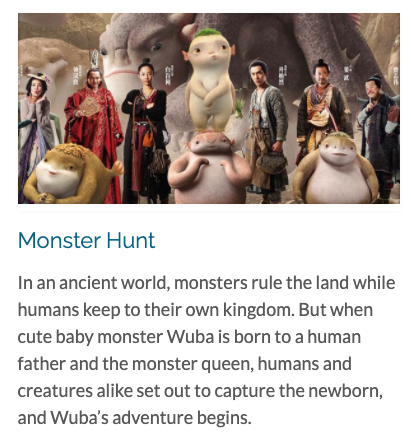
Thankfully, a whole raft of movies are now available in Mandarin, making “Mandarin movie night” a much easier thing than it was even five hears ago.
Here’s a nicely curated list of family-friendly movies that are either in Mandarin or have Mandarin dubbing available. Generally speaking Mandarin subtitles aren’t so helpful for kids because they just listen in English. Though playing a movie in Mandarin and having the subtitles going is a nice way to reinforce characters.
You can also play the movie in Mandarin with English subtitles, which the parents read while the kids listen (though this depends on how fast your kids read.)
These come from the mom at the Mama Baby Mandarin website.
And here are a bunch of Mandarin dramas that are more for grown-ups, but would give you a nice sense of contemporary life in China, and you can watch them with subtitles. They might also be appropriate for high school students.
As they said on their annual scholarship award ceremony site, “Who would have believed that an upstart language learning experience in a prairie city would become the “best Chinese language program outside of China”?
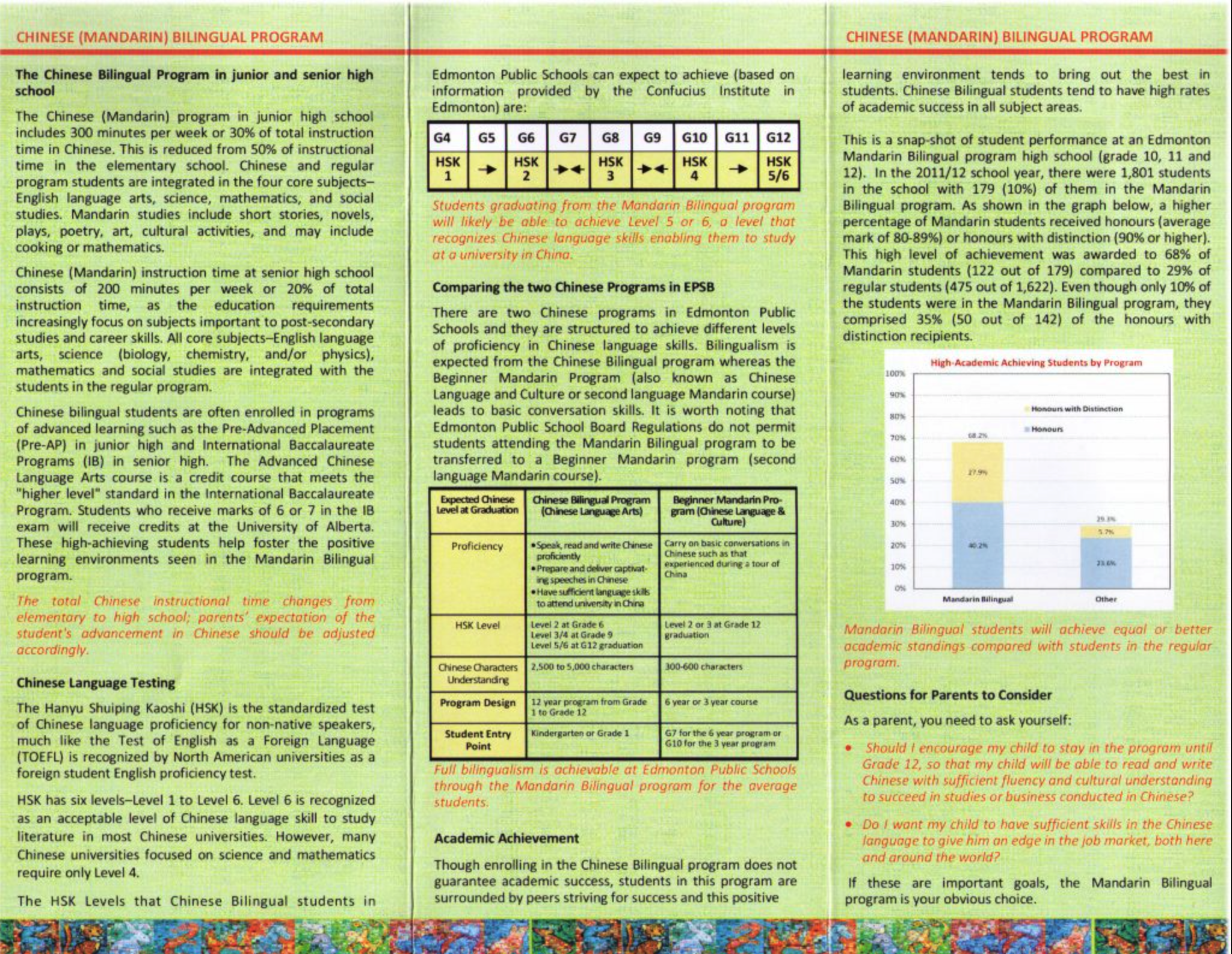
The Edmonton Public Schools, in the Canadian province of Alberta, has 2,165 students enrolled in 14 schools, 1,923 graduates and this year the parent group, the Edmonton Chinese Bilingual Education Association, awarded $356,050 in scholarship.
Not bad for a program that launched in the fall fo 1982 with one school.
Edmonton Public Schools offers a Chinese Bilingual Program that graduates students students with a level of ability that would allow them to study in science and mathematics universities in China, according to the ECBEA.
Edmonton also offers American Sign Language, Arabic, French, German, Hebrew and Spanish immersion.
Global Village Academy in Northglenn returns to in-person learning
The language immersion charter school began the school year remotely which was tough for many students.
Byron Reed February 26, 2021 9News
NORTHGLENN, Colo. — Global Village Academy (GVA) in Northglenn is a language immersion charter school that recently returned to in-person learning at the beginning of February.
GVA serves around 820 kindergarten through 8th grade students predominately from the north Denver metro area with 45% of their student population being English language learners.
At Draper Elementary, a long-standing tradition has been gathering in the multipurpose room celebrating Chinese language and culture for Chinese New Year.
This year, the school’s Chinese New Year celebration will look different. Each dual immersion classroom will still perform, but it will be recorded. Then, all the recordings will be edited together and shared on Feb. 16 in the classrooms. It also will be made available to online students and parents, said Cyndi Lin, fourth-grade teacher who is coordinating the production.
“Because of COVID, we needed to change the platform,” she said. “And with social distancing, we will keep it simple and have students sing a song or perform in their own seats.”
As of press deadline, the program was still being finalized, but Lin anticipated first-graders singing “Jasmine Flower,” third-graders stacking cups, fourth-graders performing the lion dance and fifth-graders reciting Chinese poetry. She said second-grade, which usually performs with fans, is brainstorming what will work since they need to social distance.
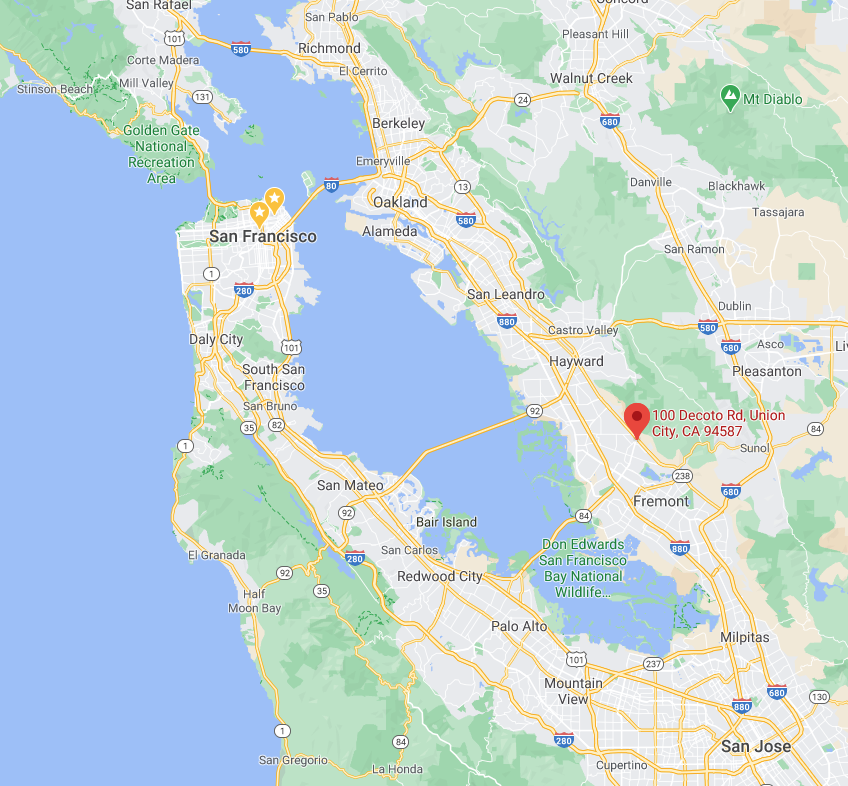
Guy Emanuele Elementary School in Union City, California has launched a Mandarin immersion program. It began in the fall of 2020.
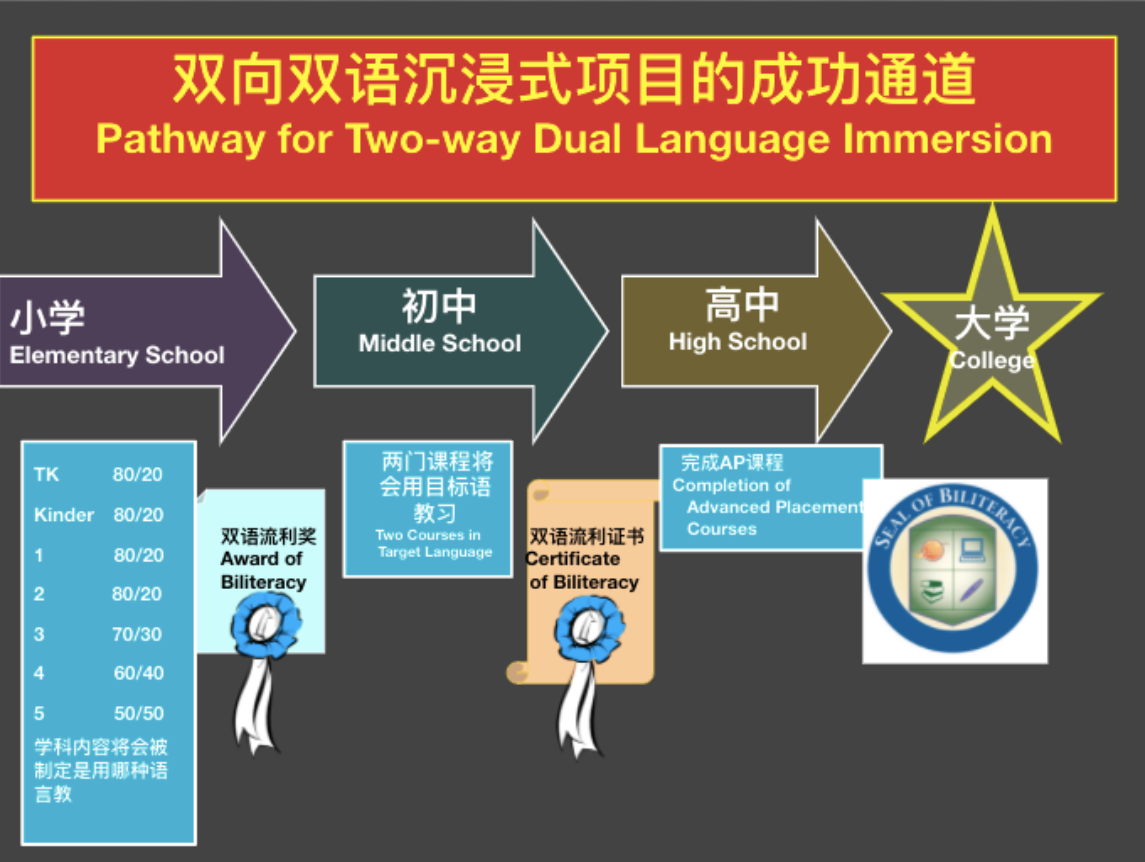
The program will use simplified characters and begin at 80 of the school day in Mandarin, 20% in English. That will gradually decline to 50/50% by 5th grade.
Launching fall of 2021.
Union City is a small city of about 75,000 central to Oakland, San Francisco, and San Jose.
The district envision a program that will extend through 12th grade. “It leads to a Seal of Biliteracy to help students stand out in college as well as in their careers,” said Clinton Puckett, the school’s principal.
They have a nice website that includes a video about the program which you can see here. The 4-year-olds telling you about what they can do and what they like are adorable!
The lovely folks at Imagin8 Press have come out with a raft of new books in easy-to-read Chinese.
These include some very easy books like Twenty Three Cats (二十三只猫) which has only 100 characters in it.
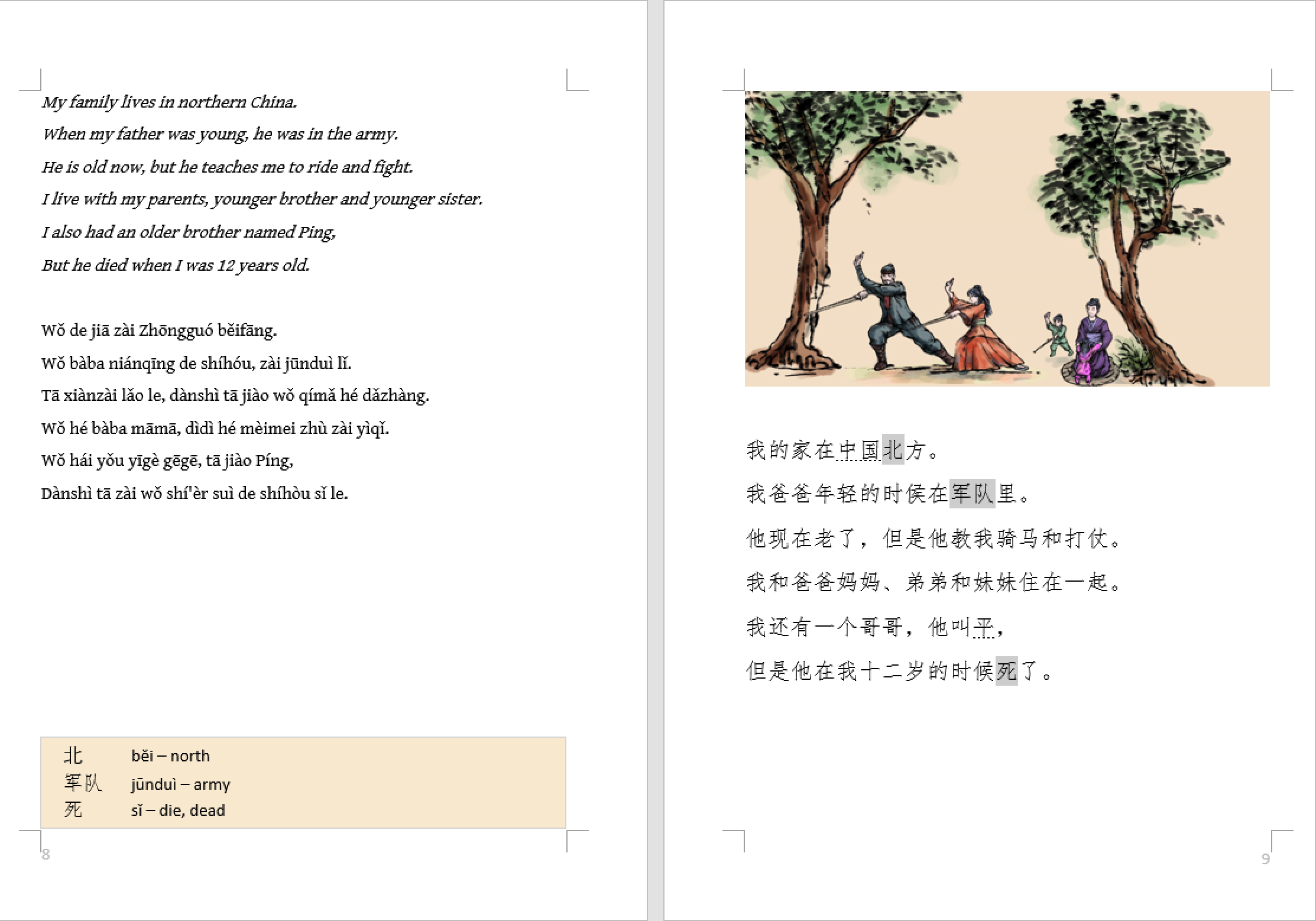
There’s also the story of Mulan, Woman Warrior in simplified Chinese using only a 240 word vocabulary.
The books also come with free audio on YouTube, so kids can listen as they read, which is a nice touch.
A page from Mulan, Woman Warrior
They’ve also got a ton of short books based on stories from the Chinese 16th century classic Journey to the West, full of stirring tales. It’s a cornerstone of Chinese literature. Imagine The Canterbury Tales, Marvel and Paul Bunyan folk stories all rolled up into one cultural behemoth and you get the idea.
It’s also home to the Monkey King stories, which your kids have probably already seen in cartons, movies and comic books.
It’s not something a U.S. student would read in the original. The edition by the People’s Literature Publishing House published in 1955 is 866,000 Chinese characters long and you’d need to know at least 3,000 or more characters to read it, according to Jim McClanahan. He reviewed Imagin8’s versio for his blog.
If you’ve got an older high school student (this is not for kids) there’s The Love Triangle (三角恋) which has a somewhat risqué cover but uses only 600 characters and is based on a Chinese story called “Lotus Fragrance,” from Strange Tales from a Chinese Studio, by Pu Songling and published in 1740. It’s about fox spirts and ghosts.
My only beef with Imagin8 Press books is that they include English and pinyin on the page facing the characters. Perhaps I am the only one who cheats and peeks at the pinyin, but I always found it better to have the pinyin at least a page-turn away, so I wasn’t so easily tempted.
They’ve got two new books, each which only uses 150 unique characters:
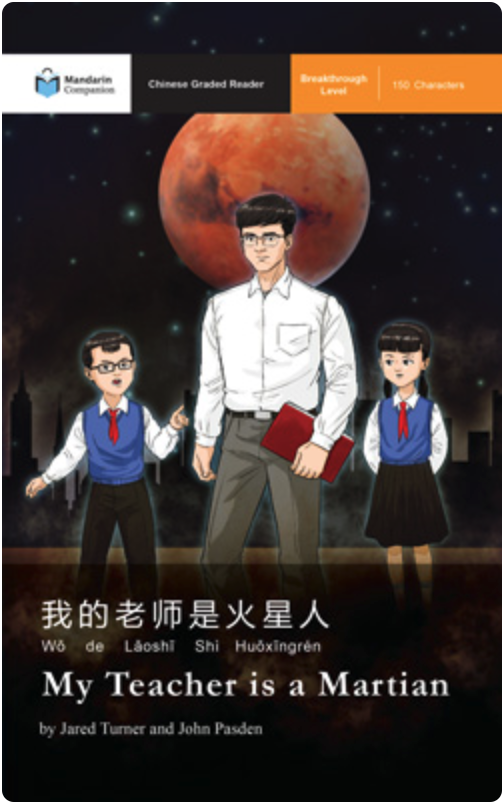
My Teacher is a Martian 我的老师是火星人
Two students are fascinated by outer space, but when their new teacher seems to know more about Mars than anyone could possibly know, they start to suspect that something is unusual. As they encounter inexplicable events, they become convinced their teacher is actually from Mars. How can they prove it and who will believe them? They may be the only ones who can discover the truth!
The Misadventures of Zhou Haisheng 周海生
Using only 150 distinct characters, this book tells the story of Zhou Haisheng, a fun-loving and determined young boy whose life revolves around school and his family’s Chinese restaurant. Always well-intentioned, he finds ways to help out his hard-working parents with the family business. Whether it’s inventing his own noodle recipe, delivering the wrong order to a customer, or resorting to extremes when a competing noodle shop opens across the street, Zhou Haisheng manages to combine his mischief and wit to save the day.
I’d love to hear your thoughts if your kids have read any of these.
A fascinating article in the Wall Street Journal from January, for those who have subscriptions. Here’s the link.
For those that don’t, some highlights:
As the relationship between the U.S. and China has grown more tense, the number of U.S. students studying there had declined by one-fifth since a peak in 2011-2012. The number studying in Taiwan has increased 55%.
A professor at the University of Michigan said many of her students have gone from seeing China as a land of opportunity 10 to 15 years ago to a potential enemy or competitor today.
The number of U.S. students studying Chinese in college declined 9% from 2013 to 2016, according to the Modern Language Association. The survey is done every 5 years, so a new one will come out this year. It will be interesting to see where the numbers are now.
That said, the people quoted in the story all said it’s important to continue to engage on a person-to-person level no matter what goes on at the national level.
Thinking about how this all applies to Mandarin immersion, here are some of my thoughts:
Whatever’s happening today, life will be very different 16 years from now the current class of Mandarin immersion Kindergarteners graduates from college.
Where will U.S.-China relations be in 2037? We have no way of knowing but they will not be what they are now.
Chinese will still be the most spoken language on the planet.
The United States and China will be two of the most economically important countries in the world.
No matter what’s happened in those 16 years, we’ll need to be able to talk to one and other.
So I wouldn’t make my decisions about what language to focus on based on what’s happening this year, but what’s happened over the last 30 — and what you think the next 30 might look like.